Non-Brief-Report

Renuka Ray: The Bengal Leader Who Shaped Modern India

During her visits to the coal mines of the Jharia region, Renuka Ray personally observed the harsh and often dangerous conditions in which women labourers worked, many of them spending long hours in unhealthy surroundings with little protection or security. The experience left a lasting impression on her. When the Constitution of India was being […]

Renuka Ray: The Bengal Leader Who Shaped Modern India Read More »
Beyond Privacy: Regulating Data Dominance in India

Data today is not merely information about individuals. It is a strategic asset. When aggregated at scale, data enables predictive analytics, market control, behavioural nudging, and algorithmic gatekeeping. The power lies not in a single data point, but in who controls the datasets, the infrastructure, and the analytical capacity to exploit them. India’s digital governance

Beyond Privacy: Regulating Data Dominance in India Read More »

India’s BRICS Presidency in a Shifting Global Order

In a changing and increasingly fragile world order, middle powers have begun to re-orient their foreign policy- France, India, and Brazil are no exceptions. All three countries are important players on multilateral platforms and have taken an independent stance on key geopolitical issues. During the state visits of French President Emmanuel Macron and Brazilian President

India’s BRICS Presidency in a Shifting Global Order Read More »

Humanizing AI: Ethics, Restraint, and the Future of Society

Technological revolutions have always reshaped warfare and politics. The industrial age expanded the scale of destruction. The nuclear age institutionalised deterrence. The AI age diffuses conflict into everyday life. The Needonomics School of Thought (NST) observes that human conflict is entering a new and unsettling phase. Wars are no longer confined to battlefields, borders, or

Humanizing AI: Ethics, Restraint, and the Future of Society Read More »

Kachchh’s Wetlands & Waterbirds: Ecology, Ecosystem Services & Conservation Challenges

Major threats to migratory waterbirds in the region are loss and degradation of wetlands, exposure to pollutants and pesticides, invasive species, hunting and disease. With the rapid rate of development in the South Asian region over the last decades, wetlands are under increasing threat from a wide range of large- and small-scale changes in landscapes,

Kachchh’s Wetlands & Waterbirds: Ecology, Ecosystem Services & Conservation Challenges Read More »

Open Letter to Bangladesh PM: Restoring Democracy & Rule of Law

Hon’ble Prime Minister of Bangladesh, The Needonomics School of Thought (NST), rooted in the civilizational ethos of balanced development and ethical governance, extends its warm greetings to you on your assumption of the high office of Prime Minister of Bangladesh. Your maiden televised address to the nation on February 18, 2026, broadcast by Bangladesh Television,

Open Letter to Bangladesh PM: Restoring Democracy & Rule of Law Read More »

Why Core Engineering is Losing Ground to IT & AI in India’s Colleges

Declining capabilities of graduates from core engineering domains may eventually pose competency challenges in conventional sectors of manufacturing, construction, infrastructure, etc. and slow down the overall growth, research, and development. Reorienting the core engineering curriculum solely towards employment outcomes could show short-term gains, but their abundance is likely to create an imbalance between demand and

Why Core Engineering is Losing Ground to IT & AI in India’s Colleges Read More »

Mock Meat Mantra to Suit the Palate

A meat alternative or meat substitute is a food product made from vegetarian or vegan ingredients, eaten as a replacement for meat. Meat alternatives typically approximate qualities of specific types of meat, such as mouthfeel, flavor, appearance, or chemical characteristics. Vegan meat also called faux, fake, mock, meat analogues, or plant proteins are products that

Mock Meat Mantra to Suit the Palate Read More »

Revisiting Kautilya for Contemporary Public Policy

Sustainable governance cannot rely solely on laws, budgets, or institutional design. It must rest on dharma-anchored consciousness. When power serves duty, wealth serves welfare, administration serves people, and leadership serves moral order, governance becomes an instrument of collective flourishing. Needonomics School of Thought (NST) presents a civilizational framework of governance that harmonises economics, ethics, and

Revisiting Kautilya for Contemporary Public Policy Read More »

India’s Aviation Boom Faces Safety and Skill Gaps

In 2025, up to 17% of planes idled at airports due to spare parts shortages; estimates now place 10% still awaiting maintenance. Fleet contraction compels deployment of older, less fuel-efficient aircraft, with high leasing costs adding pressure. The industry also grapples with personnel deficits. Experts project a need for 10,300 qualified pilots by 2030 against

India’s Aviation Boom Faces Safety and Skill Gaps Read More »

Myanmar’s Contested Elections and India’s Strategic Dilemma

For India, the elections have reinforced the rationale behind a calibrated and pragmatic approach to Myanmar that prioritizes stability, dialogue, and reducing violence over ideological positioning. New Delhi continues to engage with the authorities in Naypyidaw, not to endorse military rule, but to preserve border security, sustain humanitarian access, and maintain channels for political de-escalation.

Myanmar’s Contested Elections and India’s Strategic Dilemma Read More »

India’s Agriculture Crisis and the Case for a Rainbow Revolution

While India’s overall GDP growth hovers around 7.4 percent, agricultural growth remains lower at about 4.4 percent. The gap widens income inequality between rural and urban Bharat, reinforcing migration pressures and agrarian distress. If the 21st century is to be Bharat’s century, agricultural transformation must be inclusive, remunerative, and farmer-centric. A Rainbow Revolution powered by

India’s Agriculture Crisis and the Case for a Rainbow Revolution Read More »

India’s Education Budget 2026: Beyond Optics, Toward Outcomes

India’s long-standing weakness has not been talent scarcity but ecosystem fragility—insufficient funding, weak industry-academia linkages, and fragmented research priorities. By directing resources toward institutional strengthening and research capacity, the 2026–27 Budget begins to address these systemic gaps. The Union Budget 2026–27 marks a quiet but consequential turning point in India’s education policy. With an allocation

India’s Education Budget 2026: Beyond Optics, Toward Outcomes Read More »

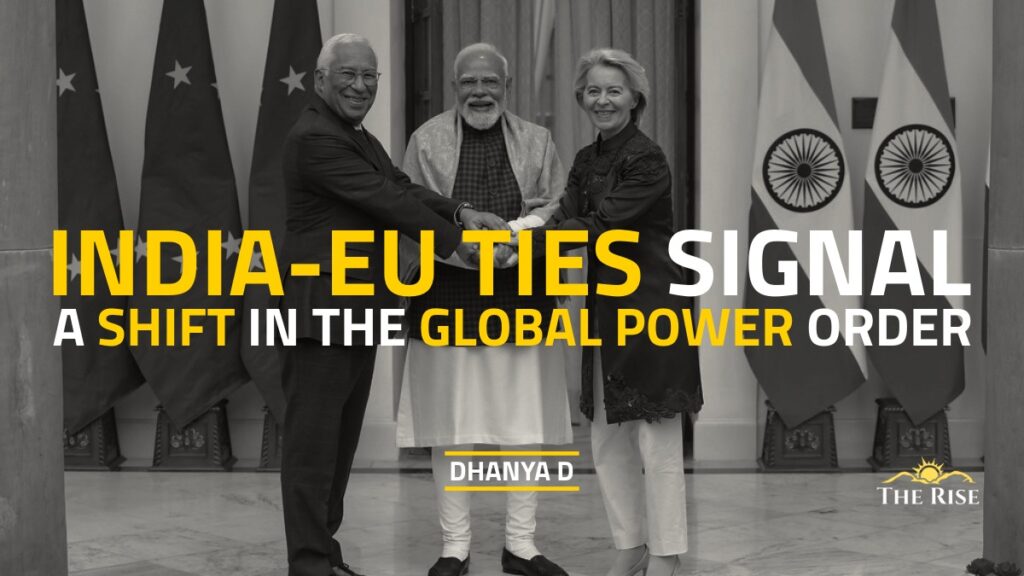
India-EU Ties Signal a Shift in the Global Power Order

The India-EU partnership is increasingly shared by democratic values and mutual benefit, contributing to an emerging architecture of international order built not on rigid blocs but on flexible coalitions. The unprecedented participation of the top EU leaders as chief guests at the Republic Day Celebrations in India marks Europe’s paradigm shift in viewing India as

India-EU Ties Signal a Shift in the Global Power Order Read More »

India Submarine Fleet: Capabilities and Strategy

India has chosen an incremental approach with clear national objectives to expand its naval power. Consistent growth builds credibility and trust among partners in maritime exercises. However, India will require accelerated naval expansion and modernisation in response to growing threats in the Indo-Pacific region and advancements in technology, such as artificial intelligence In the twenty-first

India Submarine Fleet: Capabilities and Strategy Read More »

Middle East Turmoil and Its Impact on India’s Strategic Interests

While the events in the Middle East are being watched closely in different world capitals, they are also having a strong impact in South Asia, as is evident from some of the recent developments. India has managed to deftly navigate through global geopolitical uncertainty in recent years; however, it will need to adapt to the

Middle East Turmoil and Its Impact on India’s Strategic Interests Read More »

India, Energy Security and the Politics of Western Sanctions

The situation surrounding international maritime trade and the “shadow fleet” has dramatically escalated, as Western countries have shifted their focus from political and economic pressure to direct force projection. On 19 January 2026 in New Delhi, India’s External Affairs Minister, Dr S Jaishankar, delivered a pointed critique of what New Delhi perceives as politically driven

India, Energy Security and the Politics of Western Sanctions Read More »

When Medicine Loses Humanity: The Needo-Health Approach

Needonomics School of Thought believes that medicine is a moral practice, not merely a technical service. It is rooted in judgment, humility, empathy, and care. Scientific knowledge must be guided by ethical wisdom; otherwise, it risks becoming mechanical and alienating. In an era marked by rapid technological advancement and increasing medical specialization, healthcare across the world—and particularly

When Medicine Loses Humanity: The Needo-Health Approach Read More »

Democracy and Diplomacy in a Multipolar Order

The growing multipolar nature of the world motivates this essay. It is neither unipolar nor bipolar nor driven by Cold War-type mentality. Today, conflicts between democratic and authoritarian tendencies continue to shape both domestic and international power politics. The contemporary world is in constant transition; without the momentum of space and time, human society would

Democracy and Diplomacy in a Multipolar Order Read More »

How External Politics Is Undermining India’s Universities

When external political actors enter a university to intimidate students or disrupt the academic calendar, the administrative “teeth” suddenly go blunt. This raises a fundamental question: Is campus security merely a matter of logistics, or is it a matter of selective administrative will? The sanctity of an academic institution is predicated on a fragile ecosystem

How External Politics Is Undermining India’s Universities Read More »

Needonomics and Divine Love: Beyond Needs, Beyond Transactions

Within a need-oriented mindset, many approach God through petitions and bargains, seeking to grant success, remove suffering, and protect their families. Such prayers are deeply human and understandable. They reflect vulnerability and hope. Yet, Needonomics invites a higher spiritual maturity—one in which love for God evolves from transaction to transformation. The Needonomics School of Thought-

Needonomics and Divine Love: Beyond Needs, Beyond Transactions Read More »

India’s Medical Education Crisis: Empty Seats, Falling Standards

Empty seats and falling percentiles are evidence that the Indian medical student is now choosing “competence” over being part of a “degree-seeking crowd.” This is a final warning for the system. If we allow medical colleges to remain merely “degree-distributing factories,” the future crisis will not be a shortage of seats, but a shortage of

India’s Medical Education Crisis: Empty Seats, Falling Standards Read More »

Union Budget 2026–27: A Needonomics Blueprint for Viksit Bharat

The Union Budget 2026–27 must transcend mere accounting. From a Needonomics perspective, it should serve as a tool for human development, a catalyst for employment-led growth, and a bridge between economic efficiency and social justice. The Union Budget is not merely a fiscal statement; it is a moral, economic, and developmental compass for the nation.

Union Budget 2026–27: A Needonomics Blueprint for Viksit Bharat Read More »

Relationships as Mirrors: A Needonomics Perspective

When dissatisfaction persists in relationships, it is often not because the other person was “wrong,” but because we did not integrate the lessons of past experiences. Blame becomes a convenient escape from self-reflection. Needonomics School of Thought (NST) views human life not merely as an economic or social journey, but as a deeply ethical and

Relationships as Mirrors: A Needonomics Perspective Read More »

Urban Poverty, Eviction, and Article 21: Raju Sahu v State of UP

For thousands of slum dwellers, the decision transforms eviction from a moment of displacement into an opportunity for secure housing and social inclusion. The decision of the Allahabad High Court (Lucknow Bench) in Raju Sahu and Others v. State of Uttar Pradesh and Others is a significant judgment that directly engages with questions of poverty

Urban Poverty, Eviction, and Article 21: Raju Sahu v State of UP Read More »

The Art of Bargaining: Needonomics’ Response to Tariff Terrorism

From the smallest village haat to bustling urban markets, the serious business of bargaining begins with every product, irrespective of its price. This practice is not about being miserly or distrustful; it is about asserting value, ensuring fair exchange, and enabling need-based consumption—the very pillars of the Needonomics framework. In an era increasingly marked by

The Art of Bargaining: Needonomics’ Response to Tariff Terrorism Read More »

Needonomics and Invisible Wealth: Redefining True Prosperity

Silence, self-belief, and divine grace do not operate in isolation. Together, they form a synergistic triad that enables individuals to transform adversity into opportunity and uncertainty into purpose. Silence provides clarity, self-belief fuels action, and divine grace offers reassurance and direction. In contemporary discourse, wealth is largely understood in material terms-income, assets, consumption, and visible

Needonomics and Invisible Wealth: Redefining True Prosperity Read More »

PUCL vs Union of India: Landmark Right to Food Case Explained

By constitutionalising the right to food, the Supreme Court ensured that poverty alleviation is not left to shifting political priorities or administrative goodwill. The judgment asserts that a State which allows its people to go hungry, despite having the means to prevent it, fails in its most basic constitutional duty. Emerging as one of the

PUCL vs Union of India: Landmark Right to Food Case Explained Read More »

Gita-Inspired Needonomics as a Sustainable Alternative: Book Review

The book is indispensable for policymakers, economists, educators, students, and socially conscious citizens seeking a balanced path between material progress and moral responsibility. In a world dominated by excess and exploitation, Needonomics shines as a guiding light. The latest work of Madan Mohan Goel, Gita-Inspired Needonomics: A Pragmatic Solution for a Sustainable Future, is a timely

Gita-Inspired Needonomics as a Sustainable Alternative: Book Review Read More »

VBSA Bill 2025: Reform or Centralisation of Higher Education?

Structural consolidation without decentralized empowerment often results in cosmetic reform. True autonomy cannot flourish if regulation is merely renamed or reorganized, rather than fundamentally rebalanced in favour of institutions and states. The Viksit Bharat Shiksha Adhishthan (VBSA) Bill, 2025, introduced in the Lok Sabha on December 15, 2025, certainly warrants a wide, transparent, and participative public debate.

VBSA Bill 2025: Reform or Centralisation of Higher Education? Read More »

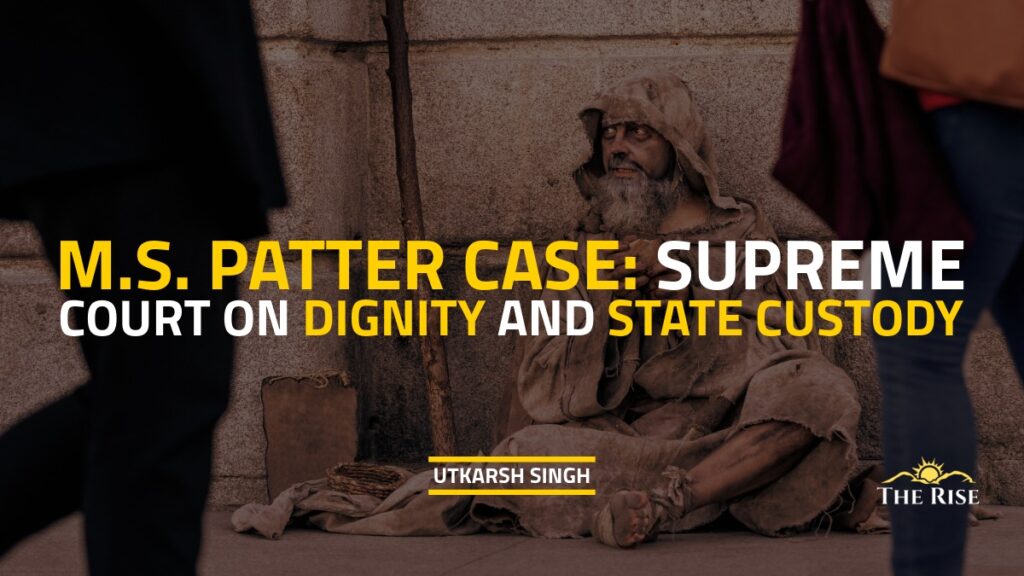
M.S. Patter Case: Supreme Court on Dignity & State Custody

One of the most significant contributions of this judgment is its re-conceptualisation of beggars’ homes. The Court made it clear that these institutions are not quasi-prisons. They are meant to function as spaces of care and rehabilitation, with the State acting as a trustee of the fundamental rights of those confined within them. The Supreme

M.S. Patter Case: Supreme Court on Dignity & State Custody Read More »

Time to Fix Admission Cycles in Higher Education in India

Private universities and Private deemed universities run fully independent, decentralised admissions, typically starting early in the calendar year. Public universities and their affiliated colleges, however, wait for the central admission agencies to complete entrance exams and counselling. This has created a clear divide between autonomous private admissions and centralised public-sector admissions. Every academic session, higher

Time to Fix Admission Cycles in Higher Education in India Read More »
What Girish v. Union of India Means for HIV Welfare in India

The Delhi High Court’s judgment is more than a legal order; it is a humane affirmation that the fight against poverty is inseparable from the fight against discrimination and exclusion. It attempts to shift the narrative around HIV/AIDS from shame and neglect to rights and dignity, by mandating free food, medical care, and ensuring the

What Girish v. Union of India Means for HIV Welfare in India Read More »
Winter Season Special: Amaranth in Daily Cooking & Beyond!

Amaranth is a highly nutritious leafy vegetable and grain as well which has been consumed by mankind for centuries all over the world. It is a gluten-free, ancient grain which has been compared with rice due to its various qualities and offerings in the culinary world. The green leaf varieties are very popular in India,

Winter Season Special: Amaranth in Daily Cooking & Beyond! Read More »

Mind Reading and the Law: India’s Next Privacy Challenge

As neurotechnology moves from labs to classrooms and courtrooms, Indian law faces a constitutional gap. Earlier this year, a paralysed man in the United States moved a computer cursor using nothing but his thoughts. The feat, made possible through Elon Musk’s Neuralink, made headlines worldwide. Closer home, a Bengaluru-based start-up launched a lightweight headband that

Mind Reading and the Law: India’s Next Privacy Challenge Read More »

CABBAGE ON A VOYAGE

It is said that the first round-headed cabbages appeared in 14th-century England, and they became more and more popular as a cuisine throughout Europe. The first cabbage in America was brought by a French explorer, Jacques Cartier, on his third voyage, 1541 – 1542. Today, China is the largest producer of cabbage, followed by India and Russia, which is the biggest consumer of cabbage. Cabbage is low

CABBAGE ON A VOYAGE Read More »

The Emotional Economics of Anger, Revenge, and Forgiveness

Needonomics teaches that resources—whether material, emotional, or intellectual—should be used wisely. Anger, revenge, and reactive behaviour are emotionally expensive habits that yield poor outcomes. A heart that behaves like a volcano—constantly erupting with anger, resentment, and negativity—cannot expect flowers to bloom. Harmony, goodwill, and meaningful relationships cannot flourish in an environment dominated by emotional explosions.

The Emotional Economics of Anger, Revenge, and Forgiveness Read More »

Agronomic Approaches to Improve Nitrogen Use Efficiency in Cereals

The productivity of cereals such as rice, wheat, maize, sorghum, millets, barley, etc., is heavily influenced by nitrogen. Yet factors such as low plant population, excessive fertiliser application, and poor methods and timing of fertiliser use have led to nitrogen (N) losses of up to 70%, contributing to reduced cereal yields. Agriculture, one of the

Agronomic Approaches to Improve Nitrogen Use Efficiency in Cereals Read More »

Needonomics: Bringing Morality Back to Economics

The Needonomics School of Thought (NST) believes that economics cannot remain value-neutral; it must guide human behaviour toward balance, responsibility, and ethical consumption. Hence, the Needonomist is not content with what is — they aspire to explore what ought to be. In the realm of ideas, the distinction between an economist and a Needonomist is

Needonomics: Bringing Morality Back to Economics Read More »

The Makhana Paradox: Bihar Grows It, Others Gain

Bihar still lacks a modern food-processing ecosystem; raw makhana is often sold to traders in states like West Bengal, Delhi, and Maharashtra, where private companies manage the stages of cleaning, roasting, flavouring, and packaging. These states then market the final product under premium brands, reaping profits that should have ideally strengthened Bihar’s local economy. Did

The Makhana Paradox: Bihar Grows It, Others Gain Read More »

Foreign Universities in India: Opportunities and Risks

Legally, these Foreign University campuses in India don’t need to implement reservations, leading to the creation of a parallel higher education system in India that is distinct from the Indian model of social inclusion. The entry of Foreign Universities into India is a multifaceted phenomenon, driven by shifts in the global education landscape and by

Foreign Universities in India: Opportunities and Risks Read More »

Threads of Nepura: Reviving Bihar’s Handloom Heritage

Their struggle is not with creativity, but with access. They can weave magic with their hands, but they lack a platform — a place to reach customers directly. Most of their earnings are eaten up by middlemen and wholesalers who buy at low prices and sell at high margins elsewhere. The handloom industry is one

Threads of Nepura: Reviving Bihar’s Handloom Heritage Read More »

Bihar’s Anganwadi Sevikas: India’s Unsung Care Workers

The Anganwadi Sevikas (AWWs) in Bihar, numbering over 1.12 lakh, are the frontline functionaries of the Saksham Anganwadi and Poshan 2.0 scheme, the Government of India’s flagship programme for early childhood care and nutrition. Yet, despite their vital role, these Anganwadi Sevikas are not recognised as government employees and are left without any access to job

Bihar’s Anganwadi Sevikas: India’s Unsung Care Workers Read More »

Rethinking Pension Tax: Towards Ease of Good Old Living

A Viksit Bharat by 2047 cannot emerge on the foundation of neglecting its elders. Ensuring tax-free pensions, inflation protection, and expanded senior citizen savings schemes is not charity—it is justice. It is both a moral and economic necessity for a society that values its past while building its future.  The moral strength of a civilisation lies in how it

Rethinking Pension Tax: Towards Ease of Good Old Living Read More »

Why Bihar’s Hospitals Remain Half-Built Promises

Across primary and secondary facilities, over 61% and 56% sanctioned posts were vacant. Tertiary and AYUSH facilities also suffer from alarmingly high vacancy rates, resulting in an overall personnel shortage of 60%. Such gaps are not just theoretical; they translate into overworked staff, unattended beds, and poor-quality healthcare. Prime Minister Narendra Modi’s inauguration of the

Why Bihar’s Hospitals Remain Half-Built Promises Read More »

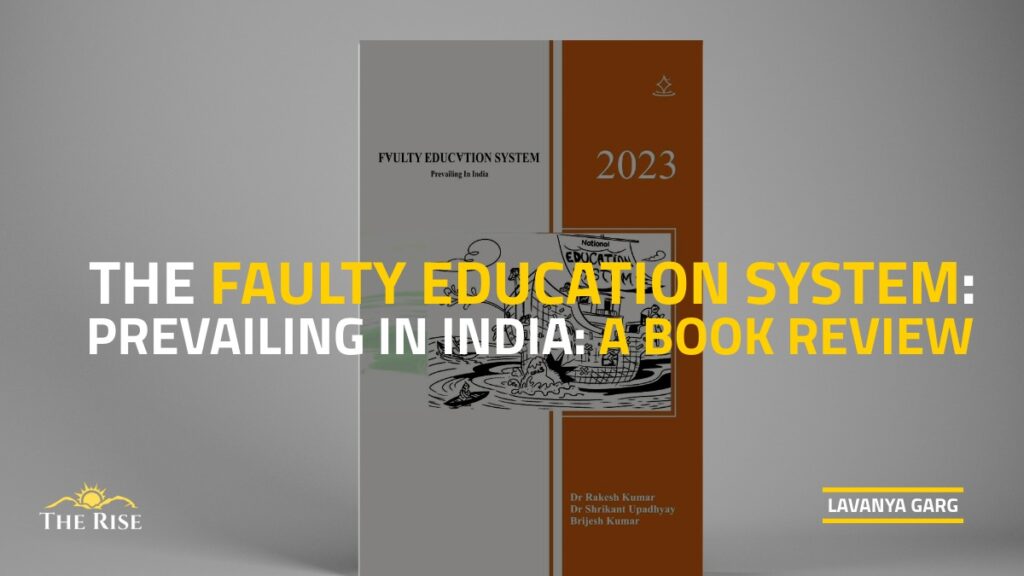
The Faulty Education System-Prevailing in India: A Book Review

The country produces many first-class degree holders, yet only a few of them possess the soft skills necessary to thrive in an increasingly competitive global economy. Education has been reduced to a ritual of performance, where curiosity is sacrificed at the altar of grades. The book not only critiques the prevailing education system in India

The Faulty Education System-Prevailing in India: A Book Review Read More »

From-Rivalry-to-AffectionNeedonomics-Insights-on-the-U.S.–China-Duopoly-and-India's-Balancing-Act.

From Rivalry to Affection: Needonomics Insights on the U.S.–China Duopoly and India’s Balancing Act

Needonomics School of Thought believes that the real progress of humankind lies not in competition but in cooperation, not in domination but in dialogue. The United States and China must realize that peace, stability, and genuine understanding are far more valuable than transient economic victories. If both nations approach their relationship with transparency and sincerity,

From Rivalry to Affection: Needonomics Insights on the U.S.–China Duopoly and India’s Balancing Act Read More »

The Hidden Carbon Cost of Electric Vehicles: A Life-Cycle Look at India’s EV Revolution

Electric vehicles (EVs) represent a pivotal shift in the automotive industry, aimed at reducing greenhouse gas emissions and dependence on fossil fuels. However, a comprehensive life-cycle assessment (LCA) reveals that while EVs deliver significant environmental benefits, they also pose substantial upstream and downstream challenges. India’s electric-mobility moment has arrived. At the recently held CII Delhi

The Hidden Carbon Cost of Electric Vehicles: A Life-Cycle Look at India’s EV Revolution Read More »

Vanishing Wetlands of Bihar How Patna’s Urban Growth Is Choking the Ganga Floodplain

Vanishing Wetlands of Bihar: How Patna’s Urban Growth Is Choking the Ganga Floodplain

Over the past two decades, Bihar has witnessed rapid growth in urbanization, mostly centred in and around the capital. Large tracts of low-lying land and “jalla” (wetlands) have been converted into residential and commercial areas, while “bagh” zones (orchards) have been urbanized. This transformation has led to the loss of the natural drainage system, worsening

Vanishing Wetlands of Bihar: How Patna’s Urban Growth Is Choking the Ganga Floodplain Read More »

The Rise in Female Suicide Bombers in Boko Haram: A Gendered Analysis of Extremism

Boko Haram has carried out numerous attacks across Nigeria and the wider Lake Chad region, leaving behind destruction, loss of life, and displacement. Among its most disturbing tactics is the recruitment of women and girls as suicide bombers, a grim reflection of the group’s gendered ideology. In just four years, these bombers killed over 1,200

The Rise in Female Suicide Bombers in Boko Haram: A Gendered Analysis of Extremism Read More »

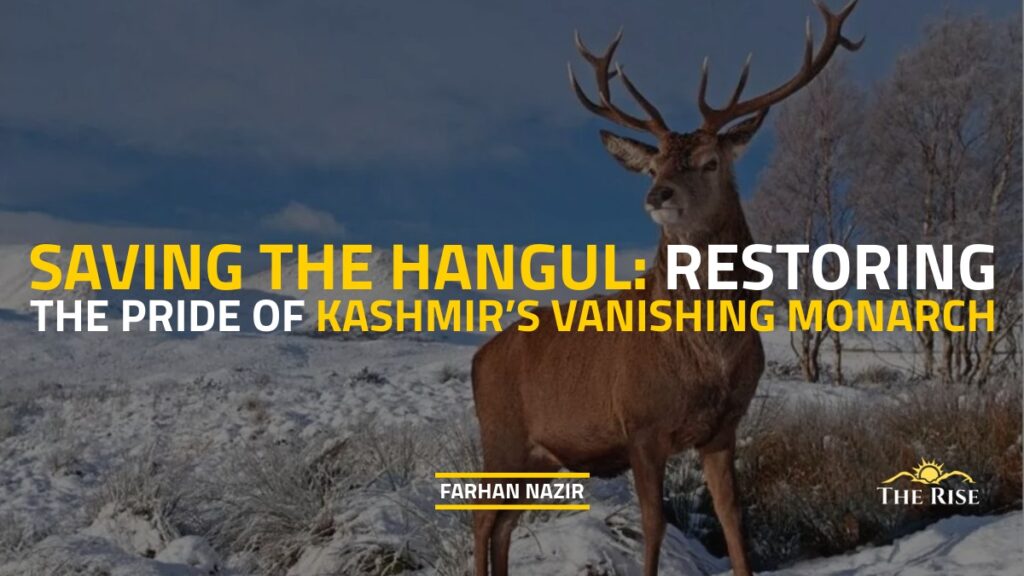
Hangul Kashmir Vanishing Monarch

Saving the Hangul: Restoring the Pride of Kashmir’s Vanishing Monarch

To the people of Kashmir, the Hangul was not just a species — it was the spirit of the forest, the silent rhythm of nature’s harmony. Yet today, that call grows rare. The decline of the Hangul is both an ecological and emotional tragedy. Once a living emblem of the valley’s abundance, the species now

Saving the Hangul: Restoring the Pride of Kashmir’s Vanishing Monarch Read More »

The Doctrine of Self-Reliance: How Xi Jinping is Engineering a Techno-Nationalist China

Doctrine of Self-Reliance is the unifying theory of Xi Jinping’s rule that has systematically and deliberately forged a techno-nationalist China. By elevating Science, technology, and innovation from an economic tool to the primary determinant of national security and identity, Xi has set his nation on an irreversible course. By authoring the global rules for 5G,

The Doctrine of Self-Reliance: How Xi Jinping is Engineering a Techno-Nationalist China Read More »

Needonomics: The Bhagavad Gita’s Path to Ethical and Sustainable Prosperity

 Needonomics School of Thought (NST), inspired by the timeless wisdom of the Bhagavad Gita, is not only an economic model but also a philosophy for meaningful existence. It teaches that prosperity without morality, power without purpose, and progress without compassion lead only to imbalance and suffering. In today’s world of economic expansion and moral decline, where materialism

Needonomics: The Bhagavad Gita’s Path to Ethical and Sustainable Prosperity Read More »

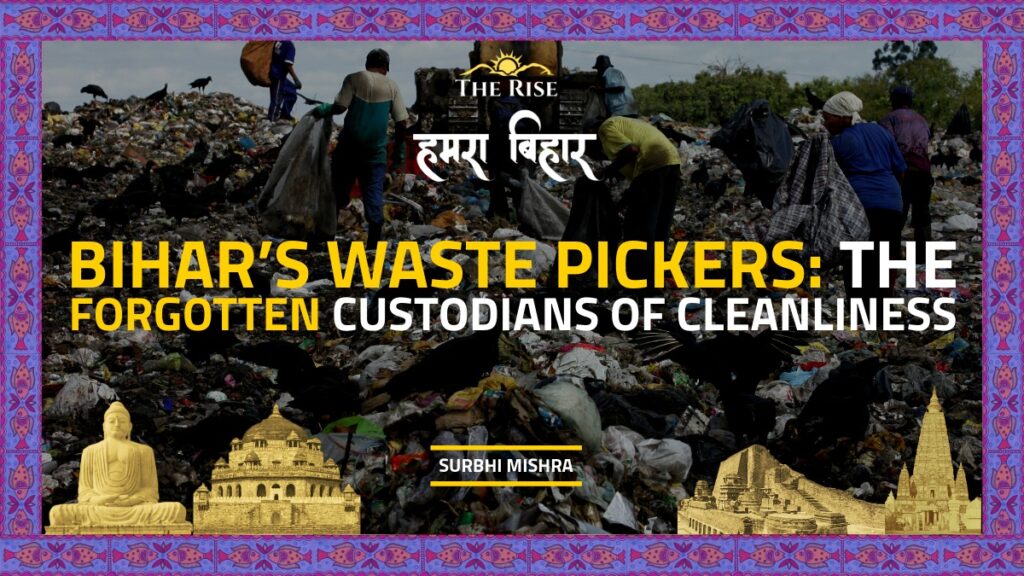
The Forgotten Custodians of Cleanliness: The Harsh Reality of Bihar’s Waste Pickers

Apart from the poor economic condition, their social mobility is also an issue. Waste picking carries heavy caste and class stigma. Many waste pickers belong to marginalized communities and face daily verbal abuse. Their children are bullied in schools, reinforcing exclusion and a sense of inferiority. In the Ramchak Bairiya dumping yard on the outskirts

The Forgotten Custodians of Cleanliness: The Harsh Reality of Bihar’s Waste Pickers Read More »

From Waste to Wonder- Learning Geography through Touch

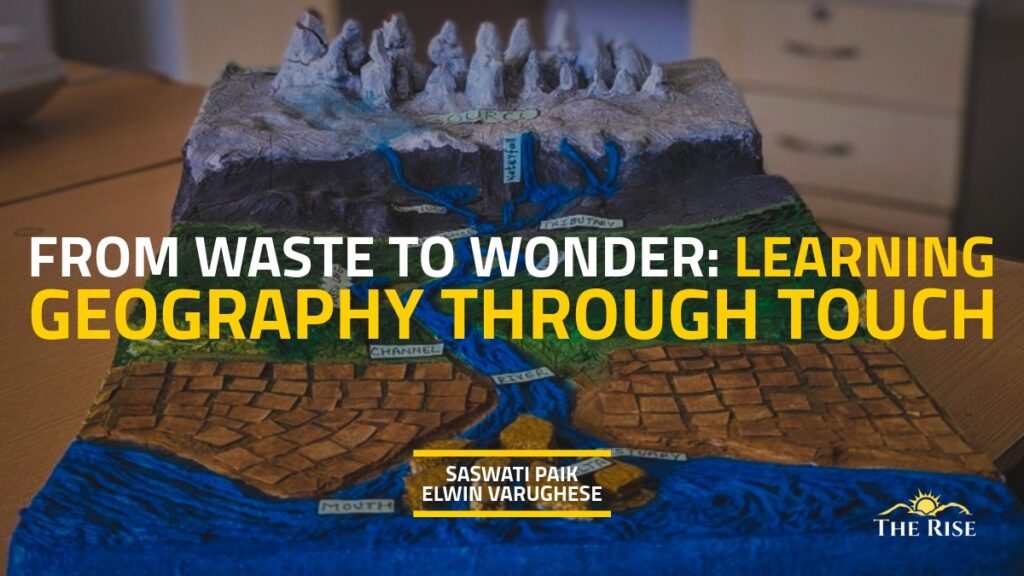
From Waste to Wonder: Learning Geography through Touch

Despite decades of educational reform, India still lacks comprehensive research on inclusive TLMs (Teaching Learning Materials) and pedagogical strategies for visually impaired learners. The RPWD Act (2016) mandates free education for every child with benchmark disabilities in special schools. However, the Act does not ensure that these schools are equipped with the materials and infrastructure

From Waste to Wonder: Learning Geography through Touch Read More »

How Bihar Is Turning Sports Into a Tourism Powerhouse

How Bihar Is Turning Sports Into a Tourism Powerhouse

Bihar’s sporting revolution is more than new stadiums and glossy inaugurations; it is an effort to reconfigure the state’s economy where sport becomes an engine of travel, investment, and local entrepreneurship. Rajgir has just cut the ribbon on Bihar’s first world-class international cricket stadium — a 45,000-seat arena with gleaming pavilions and Olympic-grade facilities. But

How Bihar Is Turning Sports Into a Tourism Powerhouse Read More »

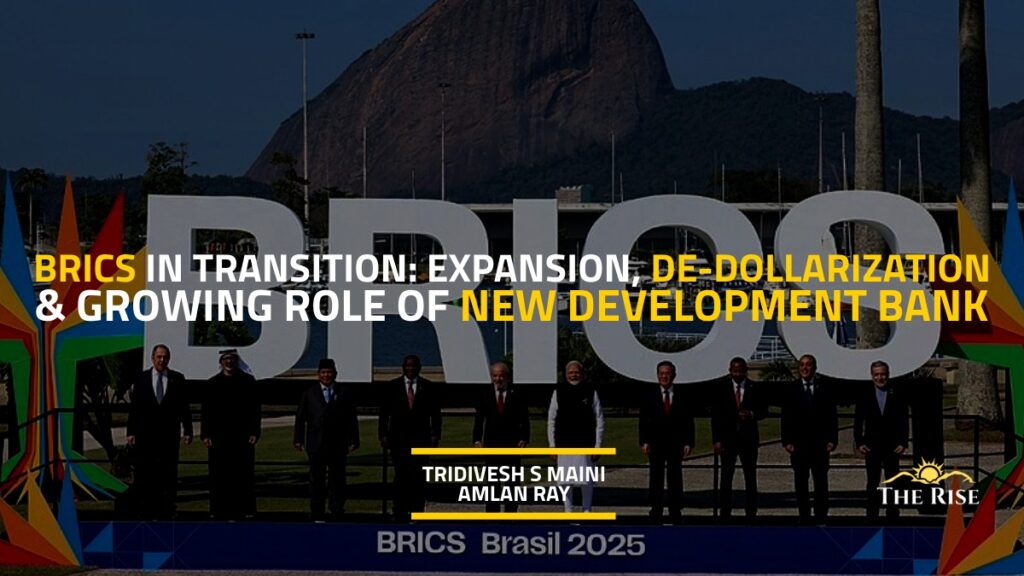
BRICS in Transition: Expansion, De-Dollarization, and the Growing Role of the New Development Bank

While the idea of a BRICS common currency has been ruled out by several member states, the organisation is now focusing on developing a common payment system for member countries. Apart from the Existing national payment systems like China’s Cross-Border Interbank Payment System (CIPS), and India’s Unified Payments Interface (UPI), the New Development Bank is

BRICS in Transition: Expansion, De-Dollarization, and the Growing Role of the New Development Bank Read More »

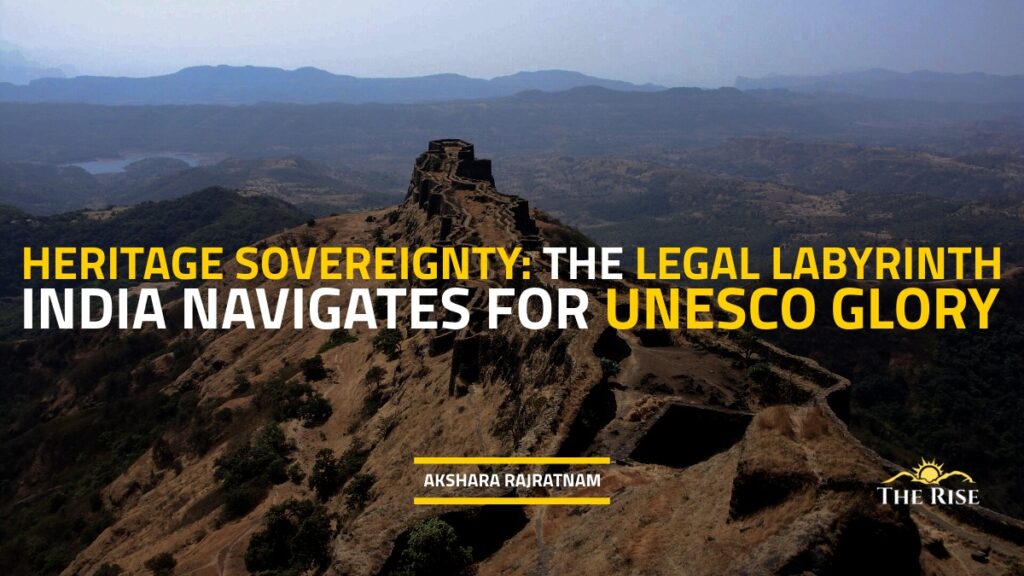
Heritage Sovereignty: The Legal Labyrinth India Navigates for UNESCO Glory

As India contemplates future nominations from its provisional list, the implications are evident: UNESCO recognition confers international prestige and the potential to draw tourists, yet it also imposes intricate legal obligations that constrain policy autonomy for future generations. When India celebrated the addition of the Maratha Military Landscapes to its list of UNESCO World Heritage

Heritage Sovereignty: The Legal Labyrinth India Navigates for UNESCO Glory Read More »

Diwali ads

An Open Letter to 2025 Diwali Ad-Makers: Do not normalize family fragmentation and commodity fetishism in the garb of Diwali

When commodities like paints and sweets are glorified as replacements for the joy of children visiting their parents, the very essence of Diwali as an occasion of family get-together is diminished. Emotions get marketized. Employees’ commitment towards their employers during Diwali, at the cost of their families, is now being normalized. Where are the ads

An Open Letter to 2025 Diwali Ad-Makers: Do not normalize family fragmentation and commodity fetishism in the garb of Diwali Read More »

Crores Spent, Villages Submerged: The Untold Story of Bihar’s Broken Flood Promises

The CAG audit and media reports found that hundreds of crores had been spent or marked as ‘completed,’ yet many embankment structures remained incomplete, poorly built, and offered little actual flood protection. Despite frequent claims by Bihar’s leaders that international rivers and inadequate central support are to blame, residents view this as a convenient deflection,

Crores Spent, Villages Submerged: The Untold Story of Bihar’s Broken Flood Promises Read More »

Nobel Prize in Economics 2025 Explains How India Can Ride the Waves of Innovation

The insights of Schumpeter and this year’s Nobel laureates in the field of economic sciences offer a compelling framework for understanding the challenges and opportunities facing India today. The nation’s economic future, its national security, and its societal stability are all intrinsically linked to its ability to embrace and lead in the ongoing technological revolution.

Nobel Prize in Economics 2025 Explains How India Can Ride the Waves of Innovation Read More »

Human-Wildlife Conflict Deepens in Kashmir’s Ganderbal: Monkeys and Bears Take Over Fields

Over 70% of rural households have suffered losses due to wild animals. Leopards and Himalayan black bears account for most livestock attacks, while monkeys, porcupines, and wild boars ravage crops such as maize, apples, and vegetables. The damage is deep and personal. Crop losses at times reach 30% of annual yield, forcing families to abandon

Human-Wildlife Conflict Deepens in Kashmir’s Ganderbal: Monkeys and Bears Take Over Fields Read More »

From Greedonomics to Needonomics: Rethinking Economics for a Fair and Sustainable Future

Every society grapples with the tension between wants and needs, between accumulation and sufficiency, between competition and cooperation. Needonomics School of Thought offers an ethical compass to navigate these dilemmas. The global community stands at a defining crossroads today. Despite unprecedented technological progress, the centralized state and globalized markets are failing to address the most

From Greedonomics to Needonomics: Rethinking Economics for a Fair and Sustainable Future Read More »

Sonam Wangchuk’s Arrest Under NSA: Balancing National Security and Civil Liberties in India

The Wangchuk case necessitates a revisit to preventive detention in contemporary India. While instances of genuine national threats may occasionally trigger the usage of extraordinary measures, the routine invocation of special laws like the NSA, even in situations manageable under ordinary criminal laws, erodes civil liberties without corresponding security gains.  The recent arrest of the

Sonam Wangchuk’s Arrest Under NSA: Balancing National Security and Civil Liberties in India Read More »
Karambhumi & Needonomics: Transforming Work from Stress to Joy, Purpose, and Spiritual Growth

In today’s context, the idea of Karambhumi assumes renewed importance. Globalization, migration, and digitization have blurred the boundaries of geographical workplaces. For the Needonomics School of Thought workplace—whether rural or urban, physical or digital—is a Karambhumi where ethical action can be cultivated. Needonomics School of Thought (NST) emphasizes that Karambhumi—the land of action, or one’s workplace—is the most significant dimension

Karambhumi & Needonomics: Transforming Work from Stress to Joy, Purpose, and Spiritual Growth Read More »

From Trump Tariffs to China’s Subsidies: Why India Must Rethink Its Medical Device Dependence

India’s domestic medical device industry remains highly fragmented, with most firms operating on a small or medium scale and lacking the infrastructure and capital needed to compete globally. Unlike China, India does not provide super deductions for Research and Development, limiting incentives for innovation. While the sector is poised for transformation, the shift from import

From Trump Tariffs to China’s Subsidies: Why India Must Rethink Its Medical Device Dependence Read More »

BRICS+ in Transition : Palestine’s Membership Push, India-Russia Ties, and U.S. Criticism

While India recognizes the limitations of BRICS, and ties with the US remain important despite recent setbacks, it is likely to adopt an independent approach vis-à-vis BRICS. It is also important to understand that while the BRICS+ organisation has immense potential, there are several complexities that need to be understood. Developments within BRICS+ highlight its

BRICS+ in Transition : Palestine’s Membership Push, India-Russia Ties, and U.S. Criticism Read More »

Supreme Court’s Dupare Ruling: A Turning Point for Death Penalty Safeguards in India

The judgment underscores that justice in death penalty cases must be both swift and scrupulously fair, leaving no room for error when a life hangs in the balance. On August 25, 2025, the Supreme Court in Vasanta Sampat Dupare v. Union of India delivered a landmark ruling on capital-punishment jurisprudence. A three-judge bench comprising Justice

Supreme Court’s Dupare Ruling: A Turning Point for Death Penalty Safeguards in India Read More »

Why India’s Urban Transport Fails: Insights from TheRise Survey on Commuters, Traffic, and Safety

In a country where nearly 90 percent of the population earns less than 25,000 a month, 12-15% of the salary is just lost in the daily commute. For a family already counting every rupee, it is almost unimaginable: how do they manage rent, groceries, or even put something aside for their children? Every morning, Indian

Why India’s Urban Transport Fails: Insights from TheRise Survey on Commuters, Traffic, and Safety Read More »
Reviving the Indian Coffee House Legacy: Towards Inclusive and Sustainable Cafeterias

If the Indian Coffee House represented the warmth of “one more cup before we leave,” today’s cafeterias must represent the freedom of “choose our cup, stay as long as we need.” In doing so, we would not only revive the legacy of the Coffee House but also reinvent it for the challenges and aspirations of

Reviving the Indian Coffee House Legacy: Towards Inclusive and Sustainable Cafeterias Read More »
Fraud in Vehicle Emission Testing: How Fake Certificates Worsen India’s Air Pollution Crisis

Emission testing fraud isn’t just an environmental crime — it’s a betrayal of public trust. Across India’s cities, centres have been caught handing out certificates prepared in advance, faking tests by merely attaching nozzle pipes, and rigging results to let toxic vehicles stay on the road. Air pollution is choking our cities, and vehicles are

Fraud in Vehicle Emission Testing: How Fake Certificates Worsen India’s Air Pollution Crisis Read More »

Supreme Court’s Landmark Godavarman Verdict 2025: Balancing Forest Protection with Human Settlements

The judgment improves predictability for rural livelihoods and encourages sustainable planning. The order goes beyond addressing individual encroachments. It attempts to bridge legal gaps while also setting out broader policy implications for forest governance. But with nearly 88,400 environment-related cases still pending across Indian courts, the challenge of judicial backlog remains pressing. On August 25,

Supreme Court’s Landmark Godavarman Verdict 2025: Balancing Forest Protection with Human Settlements Read More »

H-1B Visa Shock: Trump’s $100,000 Fee Hike and Its Fallout for India and the U.S.

Trump’s recent proclamation is likely to impact not just India but the US economy as well, so it is important to approach the issue without bias. It may also be premature to draw firm conclusions, as many believe that the Trump administration may reconsider the decision given its potential effects on the US economy. In

H-1B Visa Shock: Trump’s $100,000 Fee Hike and Its Fallout for India and the U.S. Read More »
Supreme Court Judgment on Election Petitions and Compliance Explained

The judgment clarifies that election petitions should not be dismissed for minor technical errors, as long as curative remedies are possible. Overemphasis on technical compliance can result in the dismissal of meritorious petitions, while ignoring procedural requirements can compromise fairness. On August 22, 2025, a two-judge bench, comprising Justice Surya Kant and Justice Joymalya Bagchi,

Supreme Court Judgment on Election Petitions and Compliance Explained Read More »

Childhood Obesity in Bharat: Needonomics for Nutrition Security and Healthy Demographic Dividend

The obesity crisis among children is not just a health issue; it is a moral, social, and economic challenge. By prioritizing needs over wants, by embracing mindful needo-consumption, and by balancing food with physical activity and digital fasting, Bharat can safeguard the health of its future generations. The recently released Child Nutrition Report 2025 of UNICEF, titled “Feeding

Childhood Obesity in Bharat: Needonomics for Nutrition Security and Healthy Demographic Dividend Read More »
Supreme Court on Extra-Judicial Confessions and Forensic Gaps: Neelam Kumari Case Explained

The wrongful convictions can be a result of bypassing the investigatory steps, unreliable forensic evidence, and uncorroborated testimonies. The judgment highlights the urgent need to bridge gaps in investigatory practices and ensure consistent application of the ‘Five Golden Principles of Circumstantial Evidence’. On August 20, 2025, a two-judge bench, headed by Justice Prashant Kumar Mishra

Supreme Court on Extra-Judicial Confessions and Forensic Gaps: Neelam Kumari Case Explained Read More »

Driving Against the Odds: The Socio-Economic Realities of Women Taxi Drivers in Delhi

The entry of women into Delhi’s ride-hailing and taxi sector embodies both empowerment and precarity. On one hand, it challenges patriarchal norms and creates new pathways for financial independence, but on the other, the structural inequities continue to limit this empowerment. Gig work in India is marked by deep precarity, and within this, the ride-hailing

Driving Against the Odds: The Socio-Economic Realities of Women Taxi Drivers in Delhi Read More »

Trump–Modi Exchanges: Balancing India–US Ties Amid BRICS Tensions

Recent statements of Trump clearly indicate his attempt to undo the damage caused to ties with India. However, it is challenging to make any predictions regarding the US President’s future policy course. India, for its part, has followed a pragmatic approach by responding cautiously to earlier statements of Trump and senior officials in his administration.

Trump–Modi Exchanges: Balancing India–US Ties Amid BRICS Tensions Read More »
Compassionate Conservation: Why India Needs Culture, Ethics, and People to Save Wildlife

Conservationists must work by uniting people to promote conservation. Science cannot be their only tool for this. They must understand human empathy, ethics, and morals, and use them to approach conservation goals. We need a midway approach – where science must be used to find “humane” solutions to issues that affect our wildlife. In all

Compassionate Conservation: Why India Needs Culture, Ethics, and People to Save Wildlife Read More »
West Bengal Floods and the Women Who Lead: SHGs Building Resilience in the Sundarbans

In the Sundarbans’ socio-economic milieu, where banks rarely reach and formal institutions falter, resilience is not built overnight or left to the government alone. The story of Shitama SHG exemplifies this: ordinary housewives who, armed with a ledger and a loudspeaker, map out lanes of hope and readiness long before a government Jeep or NDRF

West Bengal Floods and the Women Who Lead: SHGs Building Resilience in the Sundarbans Read More »

Scroll to Top