Though not currently listed as endangered, the Indian Chameleon faces multiple anthropogenic threats, such as habitat loss due to deforestation and land-use change. The animal is used in illegal trade despite being legally protected under the Wildlife Protection Act (1972) of India. Chameleons are occasionally captured for the exotic pet trade. In some regions, cultural myths portray chameleons as bad omens, leading to intentional killing.
Hidden among branches and often mistaken for just another lizard, the Indian Chameleon remains one of the least understood and least discussed reptiles in India’s wildlife conservation discourse. The conservation of this extraordinary reptile requires a comprehensive scientific perspective on a creature that remains a mystery to many. How these species adapt yet remain overlooked. Are they forgotten faces of Indian Wildlife?
The Indian Chameleon: A Marvel of Adaptation and Evolution
The Indian Chameleon belongs to the family Chamaeleonidae, which encompasses over 200 species globally. This species is found throughout India and parts of Sri Lanka, Bangladesh, and Pakistan, typically inhabiting dry deciduous forests, scrublands, and gardens. Its arboreal nature makes it more commonly observed in trees and shrubs, though it may occasionally descend to the ground.
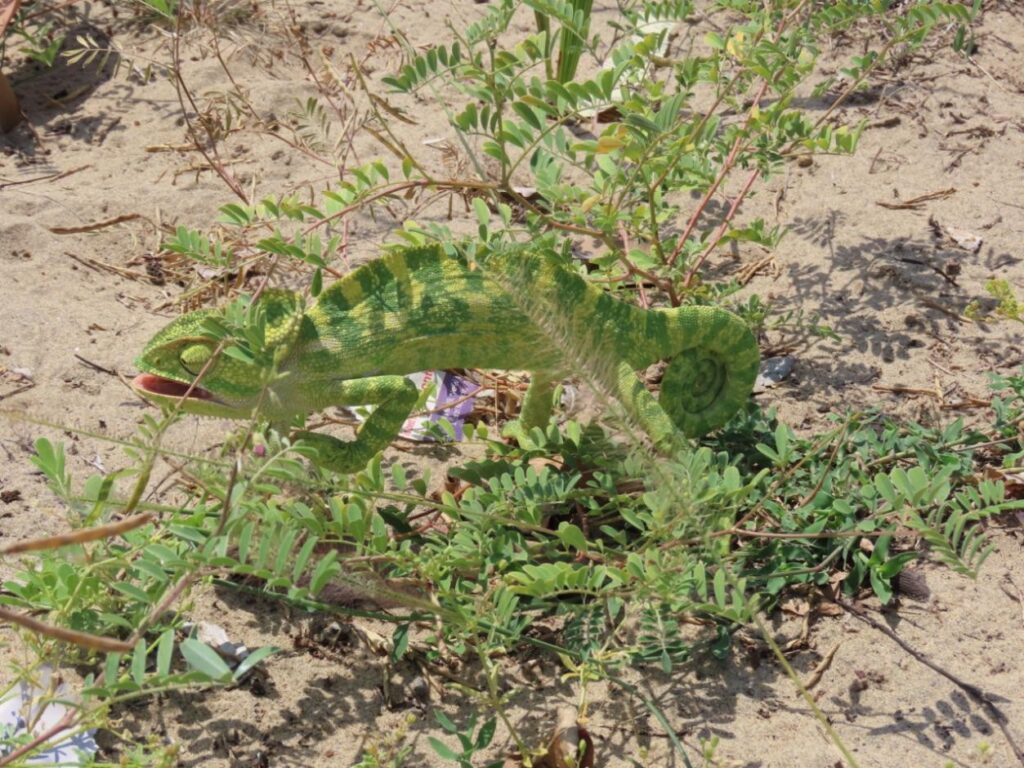
The Indian Chameleon (Chamaeleo zeylanicus) stands as a symbol of evolutionary elegance and ecological significance. Native to the Indian subcontinent, it is the only chameleon species found in India, showcasing a fascinating array of adaptations that have intrigued biologists for centuries. From its zygodactylous feet to its independently moving eyes and iconic ability to change colour, the Indian Chameleon is a masterpiece of evolutionary design.
Physiology of Colour Change
Chameleons possess specialised pigment cells in their skin called chromatophores, which are layered in complex structures. These include: xanthophores and erythrophores, which contain yellow and red pigments. Secondly, iridophores contain nanocrystals that reflect light and influence iridescence. Thirdly, melanophores, which control the concentration and distribution of melanin. The interplay of these cells, influenced by neural and hormonal signals, allows the chameleon to manipulate skin colouration. This mechanism is tied to factors like temperature regulation, stress, reproductive status, and social interaction.
Sensory and Neural Adaptations
The Indian Chameleon’s sensory systems are highly developed. Its vision is among the most advanced in reptiles, capable of depth perception and motion detection. The eyes are capable of stereoscopic vision when fixated on prey, allowing accurate targeting. Its hearing is limited but adapted to detect low-frequency vibrations, which can be crucial in avoiding predators. Neurologically, the Indian Chameleon exhibits coordination between visual and motor systems, especially during prey capture. The ballistic tongue projection is a marvel of biomechanics, involving muscular contraction, elastic energy storage, and neural timing precision.
Behaviour and Ecology
The Indian Chameleon is diurnal and solitary, often spending its time slowly navigating tree branches. Its cryptic colouration and slow movement reduce detection by predators. Males exhibit aggression through colour displays and body inflation to ward off rivals. During the breeding season (May to October), males court females through vivid colour changes and head-bobbing. After mating, females lay 20-40 eggs in shallow burrows, which incubate for about 6-9 months depending on environmental conditions. It is an insectivore, primarily preying on flies, grasshoppers, and caterpillars. The sit-and-wait strategy, coupled with rapid tongue projection, ensures efficient energy use. Predation pressures include snakes, birds of prey, and domestic cats, especially in peri-urban areas.
Habitat and Niche
The Indian Chameleon occupies a unique ecological niche. As an arboreal insectivore, it plays a critical role in controlling insect populations, indirectly benefiting plant health and human agriculture. It prefers habitats with moderate humidity, a sparse canopy, and high vertical complexity. Interestingly, it is also tolerant of human-altered landscapes, often found in agricultural lands, gardens, and plantations. However, habitat fragmentation and urbanisation are causing disruptions to its natural movement and breeding patterns, raising concerns about the long-term viability of local populations.
Threats to Survival & Conservation and Legal Status
Though not currently listed as endangered, the Indian Chameleon faces multiple anthropogenic threats, such as habitat loss due to deforestation and land-use change, which are the primary causes of habitat degradation. The animal is used in illegal trade despite legal protections under the Wildlife Protection Act (1972) of India. Chameleons are occasionally captured for the exotic pet trade. In some regions, cultural myths portray chameleons as bad omens, leading to intentional killing. The indirect impact of agrochemicals on insect prey and the chameleons themselves is a growing concern. As chameleons attempt to migrate or forage, they are vulnerable to being run over due to their slow movement and cryptic colouration. In India, Chamaeleo zeylanicus is protected under Schedule II of the Wildlife Protection Act (1972), which prohibits its capture or trade without permits. Additionally, it is listed in Appendix II of CITES, restricting international trade.
Research and Scientific Interest
The Indian Chameleon continues to be a subject of research in multiple disciplines. In biomechanics, its tongue projection mechanism provides insights into elastic energy storage and precision dynamics. Neuroscientific studies of eye movements and visual processing contribute to our understanding of neural integration. Also, colour science, which is based on chromophores, aids in understanding nano-optical structures and adaptive pigmentation. Additionally, its behavioural ecology serves as a model for studying solitary and cryptic predators in tropical ecosystems.
The Indian Chameleon, with its dazzling adaptations and ecological importance, serves as a testament to the wonders of evolution. Though it lives largely in the shadows, blending into the foliage, its presence is vital to the balance of the ecosystems it inhabits. As India continues to urbanise and transform its landscapes, the survival of this enigmatic reptile will depend on a blend of traditional respect for nature and modern scientific conservation. Protecting the Indian Chameleon is not just about saving a species; it is about preserving the intricate tapestry of life that defines India’s natural heritage. With greater awareness, responsible environmental practices, and inclusive conservation strategies, we can ensure that this silent, slow-moving sentinel of trees continues to thrive in its native habitat.
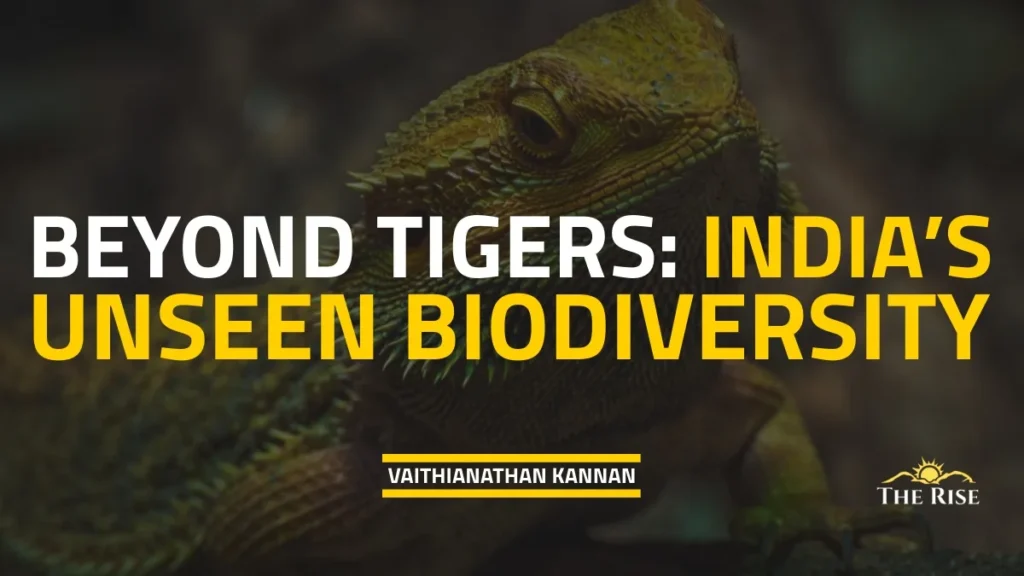
India is one of the most biologically diverse countries in the world, home to nearly 7.6% of the world’s mammalian species, 12.6% of avian species, and an astonishing range of invertebrates, amphibians, reptiles, and plants. From the cloud forests of the Northeast to the deserts of Rajasthan, the country’s varied ecosystems teem with life, much of which remains hidden in plain sight. While national icons like the Bengal Tiger, Asiatic Elephant, or Indian Peacock enjoy widespread admiration and protective policies, there exists a vast, shadowed realm of lesser-known species, including amphibians, insects, small mammals, reptiles, and even plants, that are largely ignored. Why do these species, despite their ecological significance, receive so little attention in India?
Charisma as Currency: The Megafauna Obsession
The first and most visible reason is the bias towards charismatic megafauna- large, attractive animals that capture public imagination and media headlines. Tigers, elephants, lions, and rhinos have become the face of Indian conservation. They are easier to relate to, photograph, and fundraise for. Conservation campaigns like Project Tiger or Project Elephant have brought these animals into national consciousness and policy priority. However, this comes at a cost; species without grandeur, fur, or fangs often remain excluded from these efforts. The obscure fan-throated lizard, the Malabar tree toad, or the endangered pygmy hog rarely find a place in mainstream discussions. This aesthetic bias not only dictates public interest but also steers the direction of research, conservation funding, and political will. Species that do not inspire awe or fear are often overlooked, regardless of their ecological importance.
Media and Popular Culture: Shaping Perception
Another crucial factor is media representation. News articles, television shows, wildlife documentaries, and school textbooks typically highlight only a handful of species. Stories about tigers straying into villages or leopards in urban jungles dominate headlines. Meanwhile, stories about newly discovered beetles, endangered amphibians, or declining pollinators are rare and often confined to academic circles. This selective storytelling creates a skewed understanding of biodiversity. The average citizen might be unaware of the alarming decline in vulture populations or the ecological services provided by bats, bees and beetles. Without exposure to these species, it is unrealistic to expect empathy or interest in their conservation.
Education and Public Awareness: A Missing Link
India’s education system also plays a role in this ignorance. Wildlife education in schools is minimal, often limited to iconic animals and forest conservation slogans. Ecological interdependence, ecosystem dynamics, and the role of lesser-known species are not emphasised. As a result, generations grow up recognising the tiger but not the tiger beetle, admiring the peacock but ignoring the critically endangered Great Indian Bustard. Moreover, urbanisation has created a psychological and physical disconnect between people and nature. In cities, biodiversity is often perceived as a nuisance or threat. Animals like snakes, frogs, bats, or owls are feared or ridiculed. This disconnect is worsened by cultural myths that vilify certain species- owls as omens, snakes as dangerous, and bats as dirty. Such perceptions lead to the persecution rather than the protection of these animals.
Policy and Legal Frameworks: Skewed Protection
The Wildlife Protection Act of 1972 is India’s cornerstone legal document for species protection. While it covers a wide range of flora and fauna, its enforcement and public awareness are often skewed in favour of Schedule I species, which receive the highest protection. These typically include large mammals and popular birds. Lesser-known species are either placed in lower schedules or not listed at all, making their protection legally weaker. Habitat protection, too, is often driven by the presence of flagship species. For instance, an area with tigers is more likely to be declared a protected zone than one harbouring endemic frogs or rare orchids.
Funding and Research Gaps
Conservation is expensive, and funding agencies, both governmental and non-governmental, tend to support projects that promise visibility, impact, and popularity. As a result, researchers often focus on well-known species or those linked to tourism and national pride. Field research on lesser-known taxa is sparse, and many species remain undescribed or poorly understood. India has a large pool of trained wildlife biologists, but the lack of institutional support for taxonomy and natural history studies hampers long-term ecological research. Projects on beetles, lichens, or micro-mammals often struggle for funding and academic interest, despite their vital roles in nutrient cycling, pollination, and pest control.
Colonial and Post-Colonial Legacies
India’s conservation narratives are also shaped by colonial legacies. During British rule, wildlife was viewed through the lens of game hunting and imperial prestige. Species were either “trophy-worthy” or vermin. These perceptions carried over post-independence, influencing which animals were seen as “valuable.” National parks and sanctuaries were often declared in areas that supported large mammals, reinforcing the idea that size equates to significance. Post-colonial conservation, though more ecologically aware, continued to centre on large animals. The tiger became not just a conservation symbol but a national icon, diverting attention and resources from countless other species.
NGOs and Conservation Messaging
Even non-governmental organisations and conservationists, while well-meaning, often rely on charismatic species to mobilise support. The harsh truth is that it is easier to raise money to save a tiger than a tarantula. Campaigns, events, and merchandise reflect this bias. This strategy, though practical, inadvertently sidelines species that lack glamour. Efforts like biodiversity mapping, citizen science projects, or habitat conservation often mention a broader range of species, but they struggle for visibility unless linked with a popular face.
Ecological Consequences of Neglect
Neglecting lesser-known species is not just an ethical issue; it’s an ecological one. Many of these species perform crucial ecosystem services, such as bees and moths working as pollinators, frogs and snakes working as pest controllers, scavengers working as natural cleaners, and fungi as decomposers. Their decline can lead to cascading ecological consequences. For instance, the sharp decline of vultures in India due to diclofenac poisoning has led to increases in feral dog populations and the spread of diseases like rabies. Similarly, the drop in insect populations threatens crop yields and food security. The interconnectedness of life means that ignoring the less visible threads can unravel the whole web.
Path Forward: Valuing the Unseen
Addressing this imbalance requires a multi-pronged effort, starting from education reform to introduce children to the full spectrum of biodiversity, not just the showstoppers. It also requires media and documentary makers to highlight the unusual and underappreciated. Then, citizen science platforms like iNaturalist and India Biodiversity Portal need to empower people to discover and report species. Other important measures include policy shifts that promote ecosystem-based conservation rather than species-centric strategies and scientific investment in taxonomy, natural history, and long-term monitoring of neglected taxa. Crucially, it requires a cultural shift from the awe of the extraordinary to an appreciation of the ordinary.
A dung beetle matters as much as a leopard; a coral polyp is as precious as a crocodile. In the grand narrative of Indian wildlife, the lesser-known species have long been footnotes. Yet, they are the quiet architects of ecosystems, the unsung stewards of balance and resilience. Recognising their value is not merely a scientific necessity but a moral and ecological imperative. True biodiversity conservation is not about saving the famous; it is about safeguarding the fabric of life in all its richness and complexity.
Disclaimer: The views expressed in this article are those of the author solely. TheRise.co.in neither endorses nor is responsible for them. Reproducing this content without permission is prohibited.
About the author

Dr Vaithianathan Kannan is a Wildlife Biologist who has worked with Sathyamangalam Tiger Conservation Foundation Tamil Nadu Trust, Erode, Tamil Nadu, Bombay Natural History Society, Mumbai & AVC College, PG Research Department of Zoology & Wildlife Biology, Mannampandal, Tamil Nadu, and various other NGOs. He is a member of the IUCN/WI/SSC Pelican Specialist Group (Old World) and has a voluntary position within the Old World Pelican Specialist Group. His research interests are diverse largely related to Ecology, Biodiversity, Limnology, Mammalogy, Ornithology and Wetlands