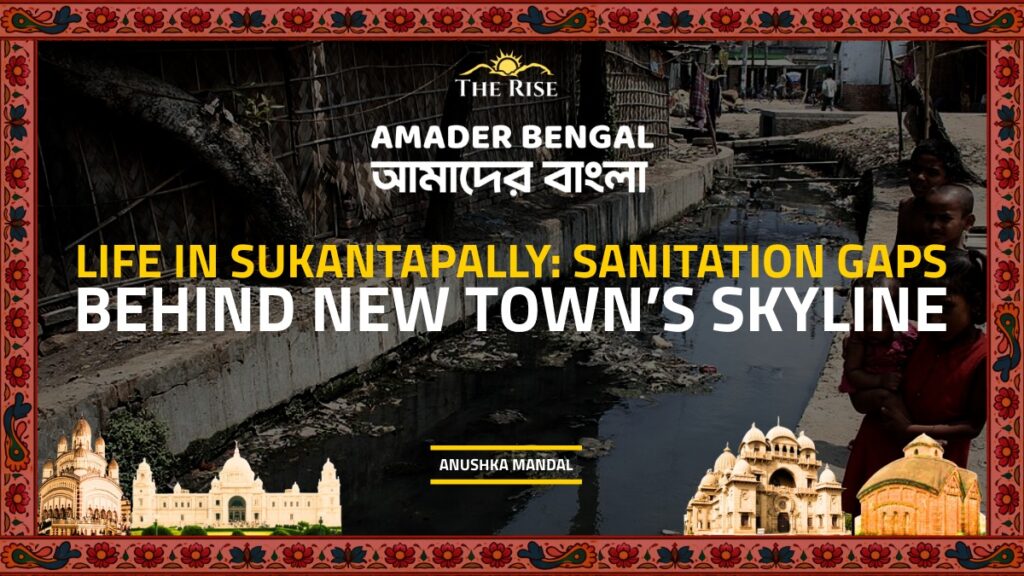
A regular day in Sukantapally starts with people clutching buckets of water and standing in queues to access the toilets. Despite several governmental initiatives, such as the Swachh Bharat Mission and the state’s Banglar Bari scheme, aimed at clean livelihoods and the rehabilitation of settlements, several issues related to the accessibility of toilets and the health and hygiene of women in these slums persist.
In the densely populated urban expanse of the Rajarhat division of North 24 Parganas, tucked behind the gleaming skyline of New Town’s high-rise apartments, lies the slum settlement of Sukantapally. Home to nearly 300 residents, Sukantapally exists on the margins of a rapidly transforming urban landscape. A closer look at the settlement reveals a paradox: many of its residents work in these high-rises, cleaning homes and maintaining premises, yet their own living conditions are marked by struggle and deprivation.
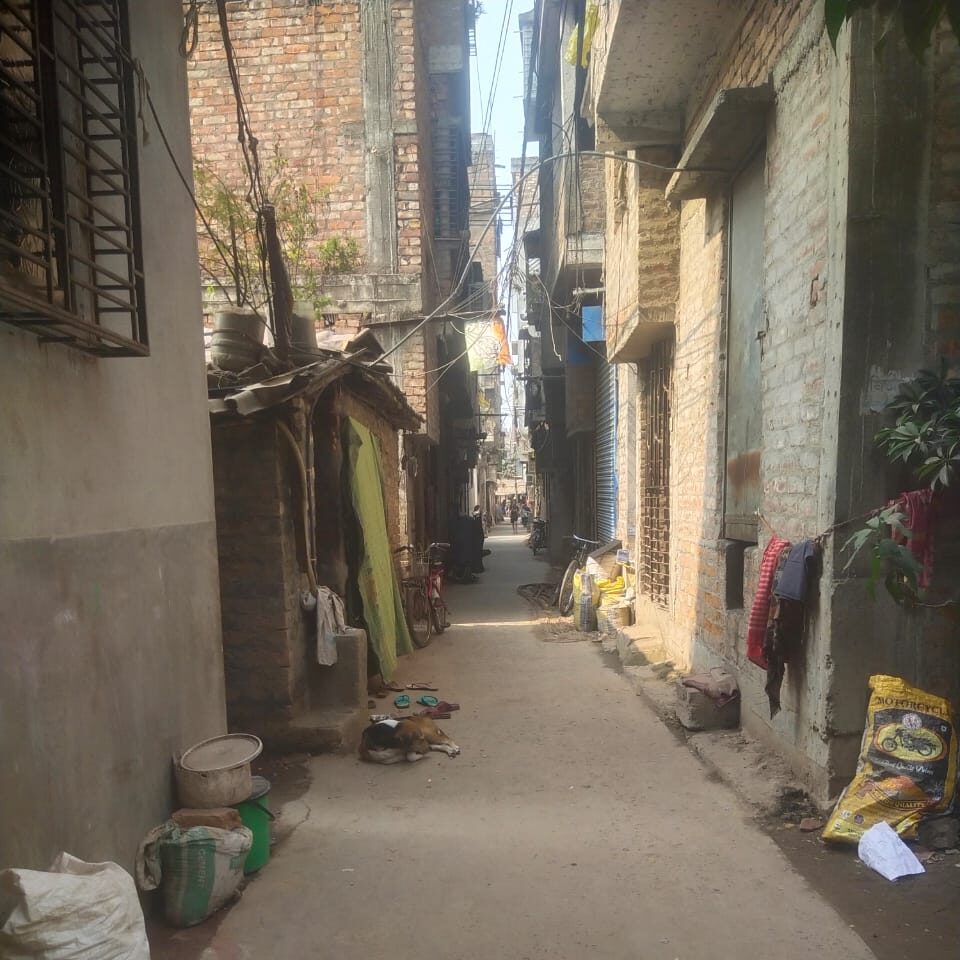
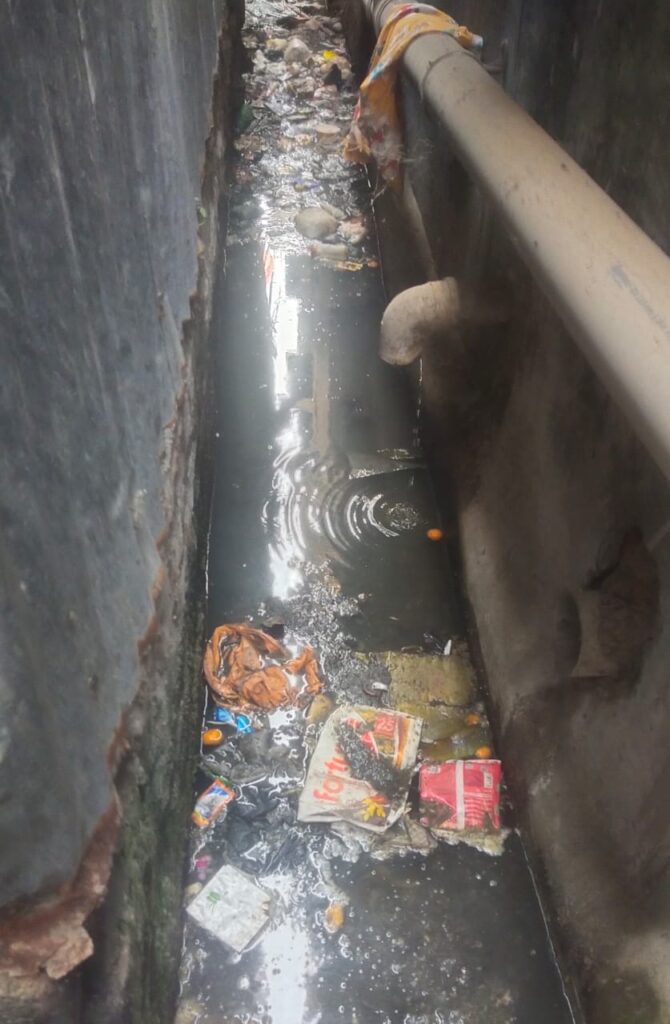
Walking through the narrow lanes of Sukantapally, one can see the stretch of houses, some built of exposed bricks, others covered with broken asbestos sheets. Clogged with wastes- both household garbage and sewage, the unclean and uncovered drains form a common sight throughout the settlement.
“The cleaning of the drains is a rare phenomenon,” said Bhaskar Ghatak, who runs a small tea shop along with his wife, near the main road of Rajarhat. “Borsha kal e jokhon brishti beshi hoy, charidike jol uthe jai aar drain er jol amader barite dhuke jai. Ei somoy amader lokeder ebong amader bacchader jor-thanda legei thake.” (During the rainy season, when there is a heavy downpour, water overflows into our house, making it worse. Added to this, our family, especially our children, fall sick due to this), his wife further added. The lack of sanitation facilities further worsens the health and hygiene conditions in the area.
“It takes around 35-40 minutes in the morning hours to use the toilet,” said Bharati Ghatak, a woman in her 40s, who works as a domestic house help in the nearby apartments of New Town. “Long waiting hours ultimately lead to open defecation by some males, out of compulsion,” she further adds. There are two toilets in the area, each used by approximately ten to twenty families.
A regular day in Sukantapally starts with people clutching buckets of water and standing in queues to access the toilets. Despite several governmental initiatives, such as the Swachh Bharat Mission and the state’s Banglar Bari scheme, aimed at clean livelihoods and the rehabilitation of settlements, several issues related to the accessibility of toilets and the health and hygiene of women in these slums persist.
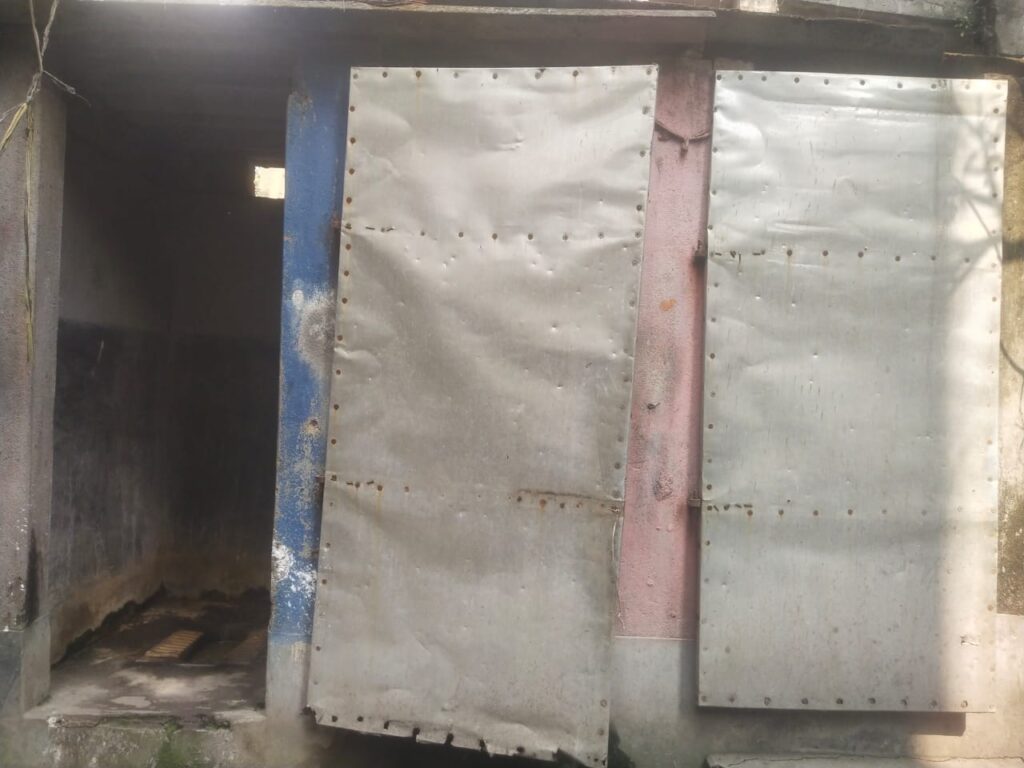
“We do not have the facility of running water, and there has been no effort to install taps in the toilets,” said Jayanti Mondol, a woman in her early 40s, who also works as a house help in the adjacent localities. “The toilet has a water tank on its roof, which has been installed by the government. But the people cannot use it due to the absence of an electric supply to pump the water to the tank,” she further adds. These gaps eventually lead to several health concerns. There are cases of Urinary Tract Infections (UTIs), causing pain and distress, which are worsened by the lack of proper medical facilities and delayed treatments in the area.
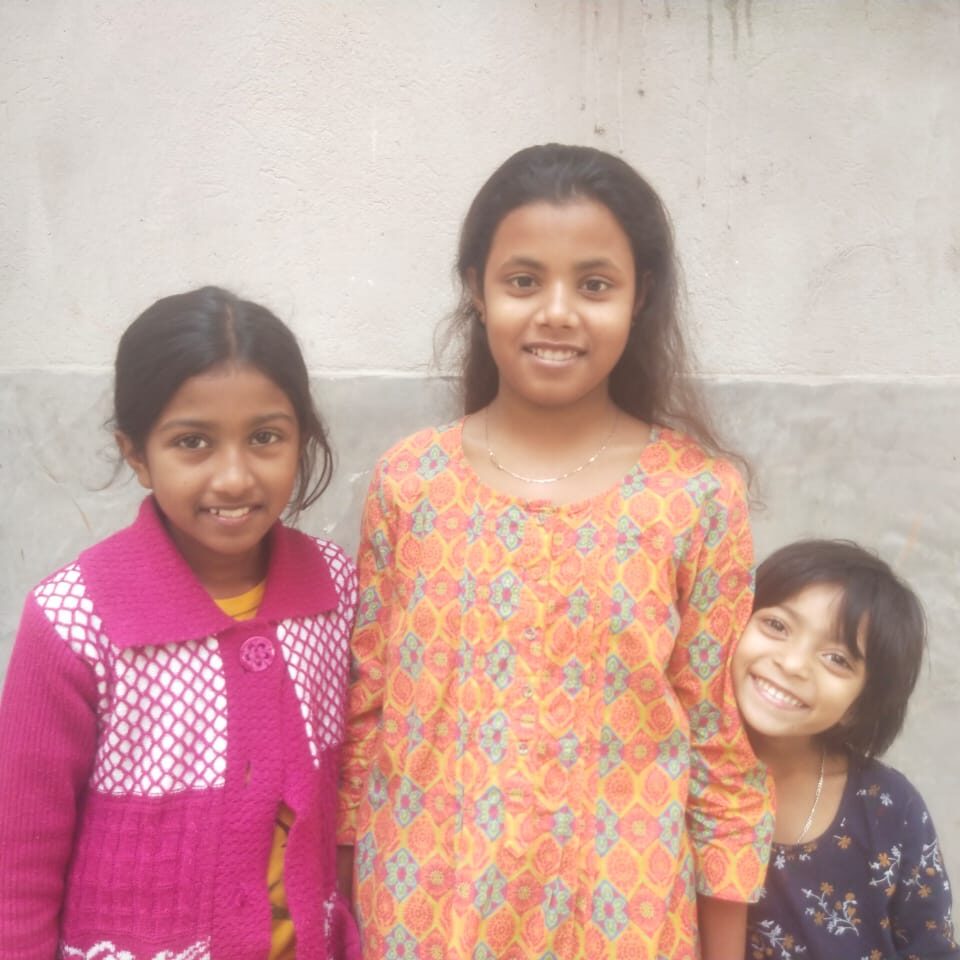
For women and adolescent girls at Sukantapally, poor sanitation does not end with infections and discomfort; it also shapes how they navigate something as basic as menstrual hygiene. “We have to resort to cloth as we can’t afford those expensive sanitary napkins”, laments Bharati, who is the mother of two girls.
“Who supports the poor? They are on their own,” said Rakhi Ghatak, an 18-year-old girl studying in the 11th standard, when asked about the support from the government or NGOs in providing sanitary napkins at a subsidized price.
Yet beyond frustration, there is clarity. When asked what they need, residents respond without hesitation: more public toilets to reduce waiting hours, running water that actually flows, and separate toilets for men and women to ensure dignity and safety for women.
Their demands stand in stark contrast to the promise of multiple sanitation policies. With nearly 1.5 million people living in slums in Kolkata, infrastructure gaps are not accidental — they are systemic. Toilet construction must match population data, and water supply must move beyond mere paperwork.
Urban development cannot be measured only by rising skylines. It must be measured by whether the people who clean the city can live in dignity within it.
(Anushka Mandal is an intern under TRIP.)
(Edited and Mentored by Sneha Yadav)
Follow the TheRise channel on WhatsApp
About the author

Anushka Mandal is a Master’s student in History at Jadavpur University, Kolkata. She is currently a TRIP intern.
-
This author does not have any more posts.

Sneha Yadav is an electronics engineer with a postgraduate degree in political science. Her interests span contemporary social, economic, administrative, and political issues in India. She has worked with CSDS-Lokniti and has been previously associated with The Pioneer and ThePrint.
-
Sneha Yadav

-
Sneha Yadav
-
Sneha Yadav
-
Sneha Yadav
-
Sneha Yadav
-
Sneha Yadav
-
Sneha Yadav
-
Sneha Yadav
-
Sneha Yadav
-
Sneha Yadav
-
Sneha Yadav
-
Sneha Yadav
-
Sneha Yadav
-
Sneha Yadav
-
Sneha Yadav
-
Sneha Yadav
-
Sneha Yadav
-
Sneha Yadav
-
Sneha Yadav
-
Sneha Yadav
-
Sneha Yadav
-
Sneha Yadav
-
Sneha Yadav
-
Sneha Yadav
-
Sneha Yadav
-
Sneha Yadav
-
Sneha Yadav
-
Sneha Yadav
-
Sneha Yadav
-
Sneha Yadav
-
Sneha Yadav