Anchar Lake plays a silent but critical role. It absorbs excess water during heavy rainfall. It supports migratory birds. It stabilizes the local climate. Its loss would ripple far beyond its shoreline.
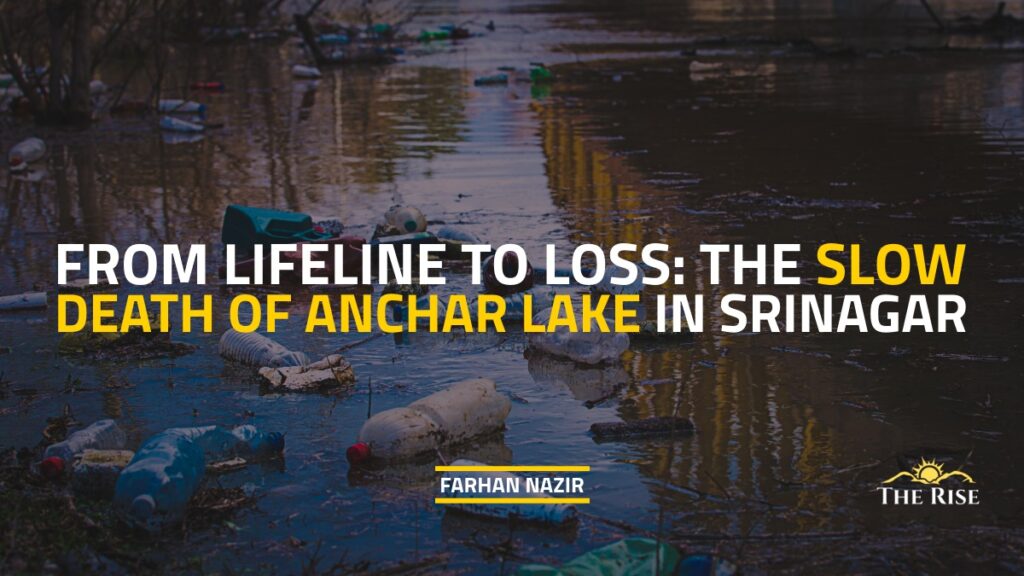
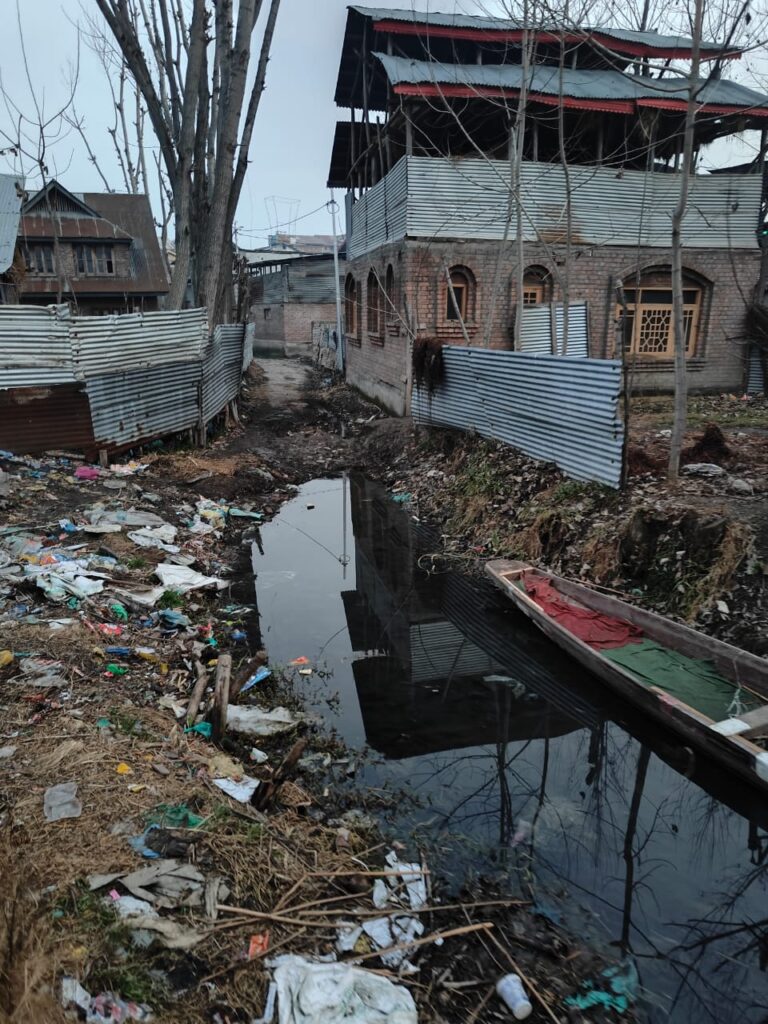
At first light, Anchar Lake looks calm. The water barely ripples, trapped beneath thick mats of weeds and floating waste. Located in the Soura area of Srinagar, Jammu & Kashmir, Anchar Lake is a shallow freshwater body that was once connected to Dal Lake through natural channels. Once known for its wetlands and rich fish diversity, now reflects neglect, decay, and quiet loss.
The lake is not disappearing in a dramatic flood or drought. It is dying slowly—season after season—while life around it struggles to adapt.
A lake that shaped lives
For generations, Anchar was more than water. It cooled summers, softened winters, fed families, and anchored communities. Children learned to swim here. Fishermen learned patience here. Homes were built with the certainty that the lake would always be there.
“Years ago, the water was clean. It was clean enough to touch without fear,” says Moomin, a lifelong resident of Srinagar, recalling his childhood days. “We depended on it for everything. But now the lake has become so polluted, and the smell is so sharp that we even avoid going near it,” he adds.
Over the years, Anchar’s natural circulation weakened. Water that once flowed freely now stagnates. Waste accumulates faster than the lake can absorb it. Thick aquatic weeds choke the surface, blocking sunlight and reducing oxygen below.
Fish struggle to survive. Birds visit less frequently. The lake’s ability to renew itself is fading.
For Nisar, a fisherman in the area, this change is measured in the number of empty nets. “Earlier, fishing meant survival,” he says. “Now it means uncertainty.”
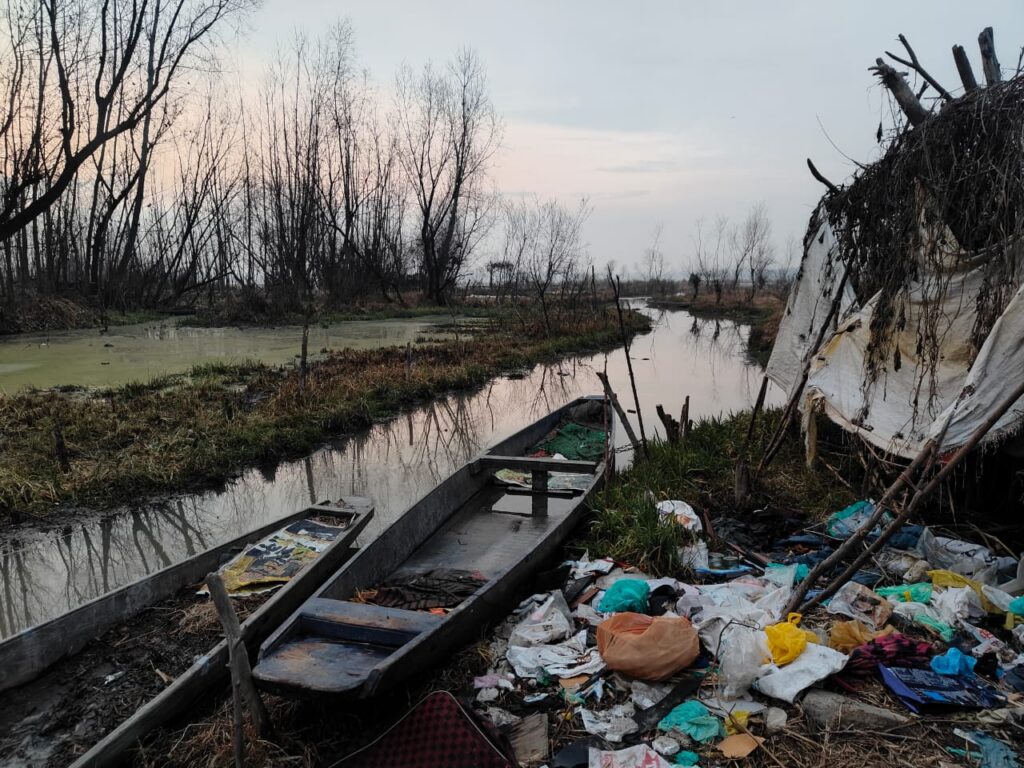
What was once a stable livelihood has turned fragile. Many boatmen have already walked away from the profession, leaving behind boats that float without purpose. For families living along the lake, the crisis is not just environmental; rather, it has seeped into their homes and daily lives.
“The smell becomes unbearable,” says Fatima has been living close to the shoreline for more than two decades now. “Mosquitoes breed everywhere. Children fall sick more often,” she further adds.
The lake that once sustained life now brings discomfort, illness, and a quiet sense of loss.
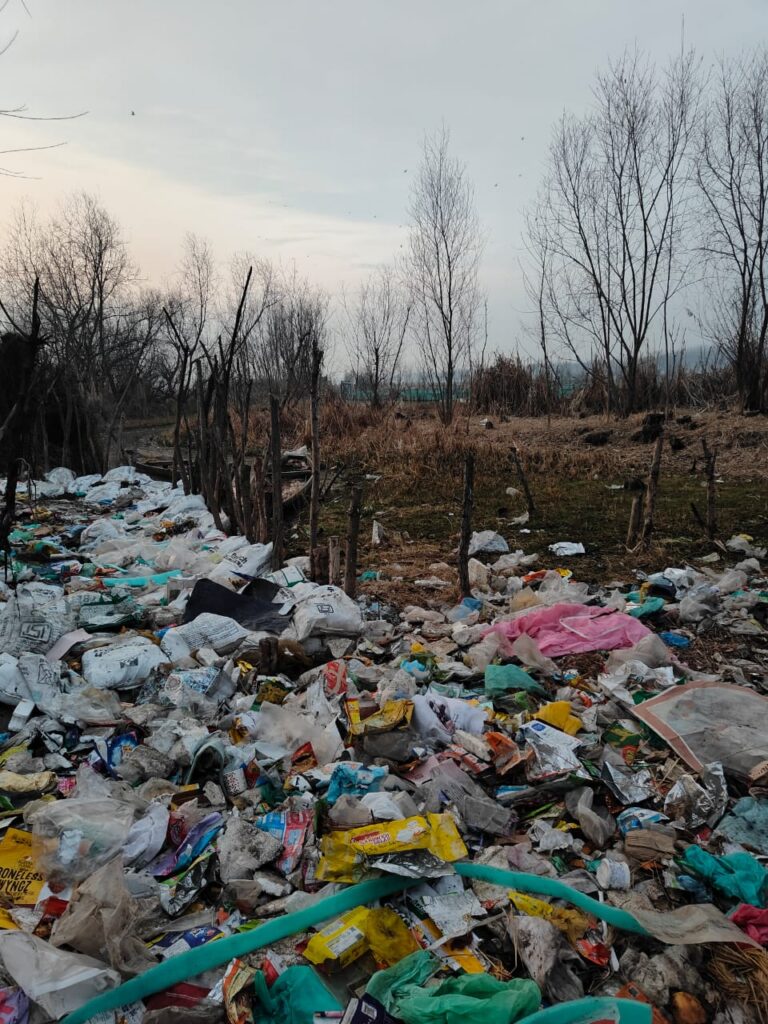
“A lake doesn’t die on its own,” says Riyaz, a local youth who documents environmental change. He rejects the idea that Anchar’s condition is inevitable. To him, what’s happening is not a natural decline, but a consequence of years of neglect.
“Lakes are living systems,” he says. “When they are treated as dumping grounds, this is what happens.”
Anchar Lake plays a silent but critical role. It absorbs excess water during heavy rainfall. It supports migratory birds. It stabilizes the local climate. Its loss would ripple far beyond its shoreline.
When lakes collapse, landscapes become more vulnerable. Floods intensify. Biodiversity disappears, and communities lose resilience.
Despite everything, Anchar still holds fragments of what it once was. At dawn, fishermen still push their boats into the water. Birds still circle overhead. The lake still breathes—though faintly.
Anchar’s story is not just about a lake in trouble. It is about what happens when natural systems are ignored until they begin to fail.
(Farhan Nazir is an intern under TRIP.)
(Edited and Mentored by Sneha Yadav)
About the author

Farhan Nazir is a passionate wildlife enthusiast and Zoology postgraduate from the Central University of Kashmir. He is deeply committed to the study and conservation of nature. With a growing interest in biodiversity protection and ecological research, Farhan strives to blend scientific knowledge with on-ground action to safeguard fragile ecosystems and aspires to build a meaningful career contributing to wildlife conservation and environmental sustainability.
-
This author does not have any more posts.

Sneha Yadav is an electronics engineer with a postgraduate degree in political science. Her interests span contemporary social, economic, administrative, and political issues in India. She has worked with CSDS-Lokniti and has been previously associated with The Pioneer and ThePrint.
-
Sneha Yadav

-
Sneha Yadav
-
Sneha Yadav
-
Sneha Yadav
-
Sneha Yadav
-
Sneha Yadav
-
Sneha Yadav
-
Sneha Yadav
-
Sneha Yadav
-
Sneha Yadav
-
Sneha Yadav
-
Sneha Yadav
-
Sneha Yadav
-
Sneha Yadav
-
Sneha Yadav
-
Sneha Yadav
-
Sneha Yadav
-
Sneha Yadav
-
Sneha Yadav
-
Sneha Yadav
-
Sneha Yadav
-
Sneha Yadav
-
Sneha Yadav
-
Sneha Yadav
-
Sneha Yadav
-
Sneha Yadav
-
Sneha Yadav
-
Sneha Yadav
-
Sneha Yadav
-
Sneha Yadav
-
Sneha Yadav
-
Sneha Yadav