The voices of these women reveal a lived truth of commitment and responsibility. Being a part of the informal labour force, they remain excluded from many of the protections available to formal workers.
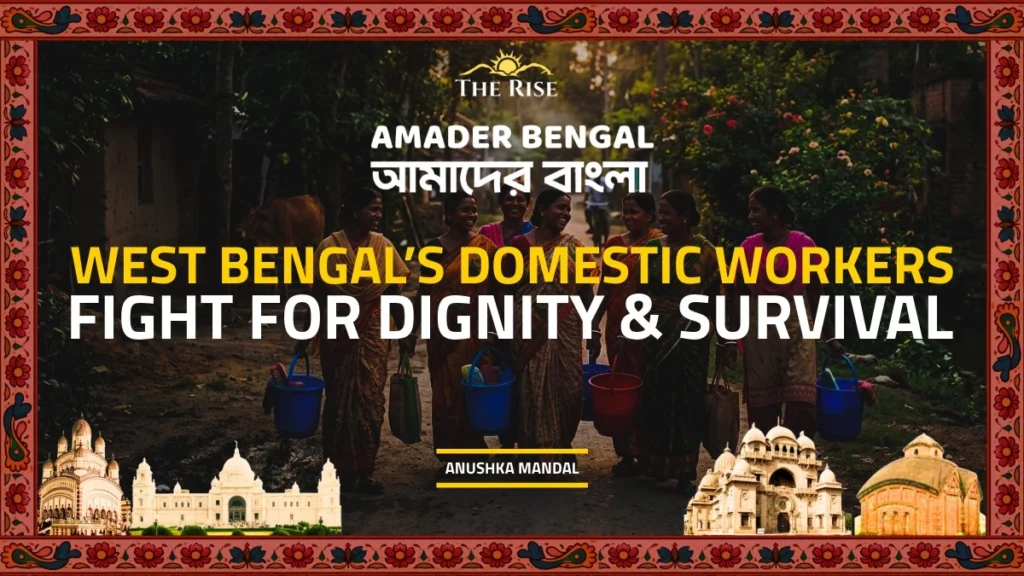
In countless households, domestic workers are the invisible hands that keep everyday life running. Yet, for the women who shoulder this labour, the work often comes without security, dignity, or recognition. Through conversations in the narrow lanes of Satarupa Pally in West Bengal, The Rise attempts to uncover the lived realities of these women whose labour sustains countless homes, even as their own struggles remain largely unseen.
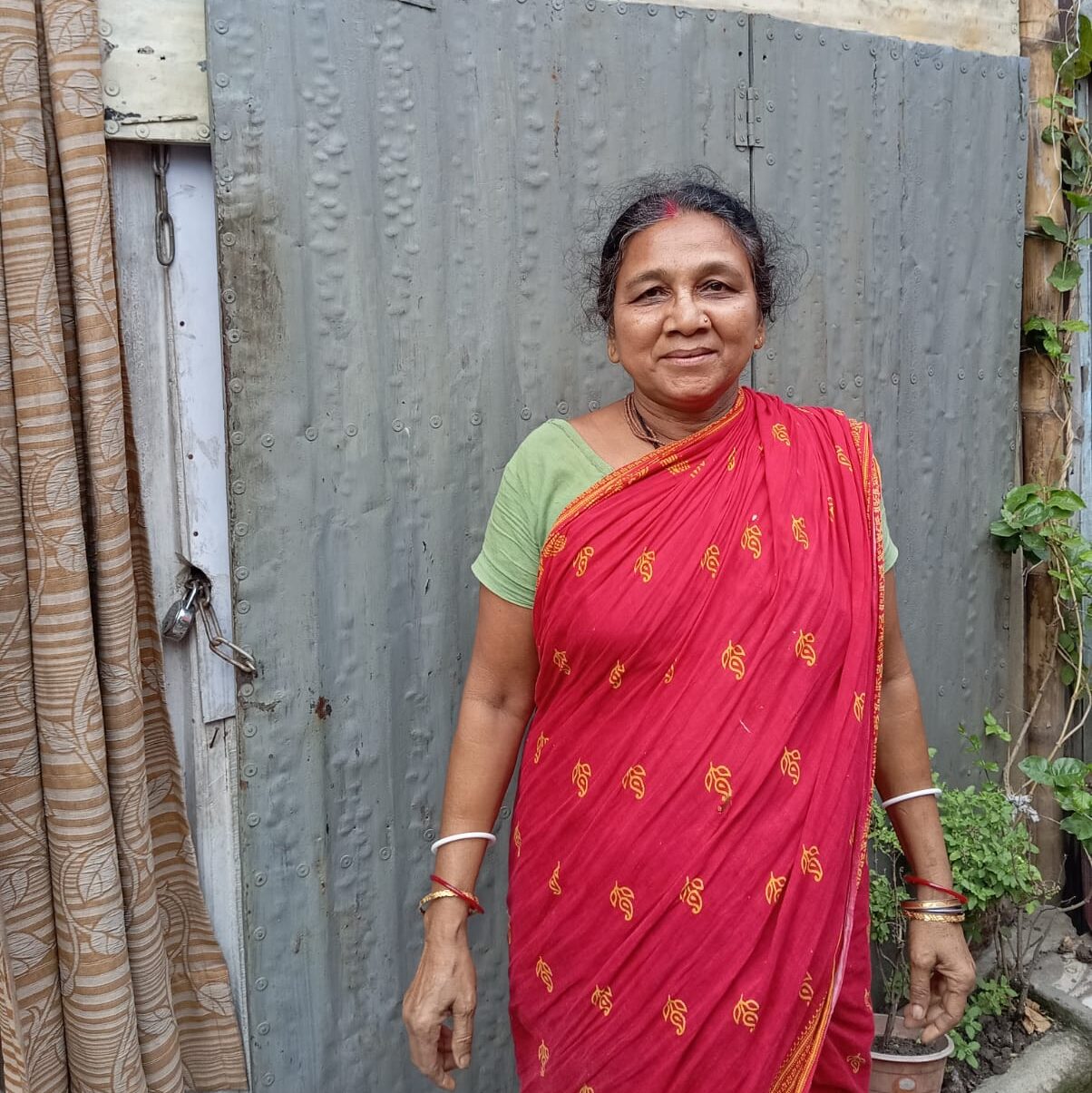
“Though poor, we are humans, and we do deserve respect. Somehow, that gaze is still there in the eyes of the people. We are still considered that community that can be easily blamed,” Rinku Dey told The Rise, with tears in her eyes, recalling a time when she was falsely accused of theft and thrown out of the house where she worked. After nearly two decades of working in other people’s homes, she said, “Such mistrust is not unusual. It is a recurring reality for workers like us.”
For Snehalata Biswas, a domestic worker in her 50s and the sole breadwinner of a family of four, the day begins before dawn and rarely ends with rest. She has been cooking in other people’s homes for the last 35 years.
“I started working in my early 20s, and I am still working because my family has no other option. My son works as a mason, but his work is irregular- some days he gets work, on others we struggle to make ends meet. If I stop working, how will we survive?” she said.
In West Bengal, an unskilled worker earns around ₹260 a day,[i] but domestic workers of Satarupa Pally describe a far more uneven reality.
“We earn barely ₹200 a day. Whatever my husband and I earn goes into managing household expenses, be it food, medicines, children’s school fees, and other daily needs. By the end of the month, there is hardly anything left in our hands,” Barnali Biswas, 38, who has been working as a domestic help for more than a decade, told The Rise.
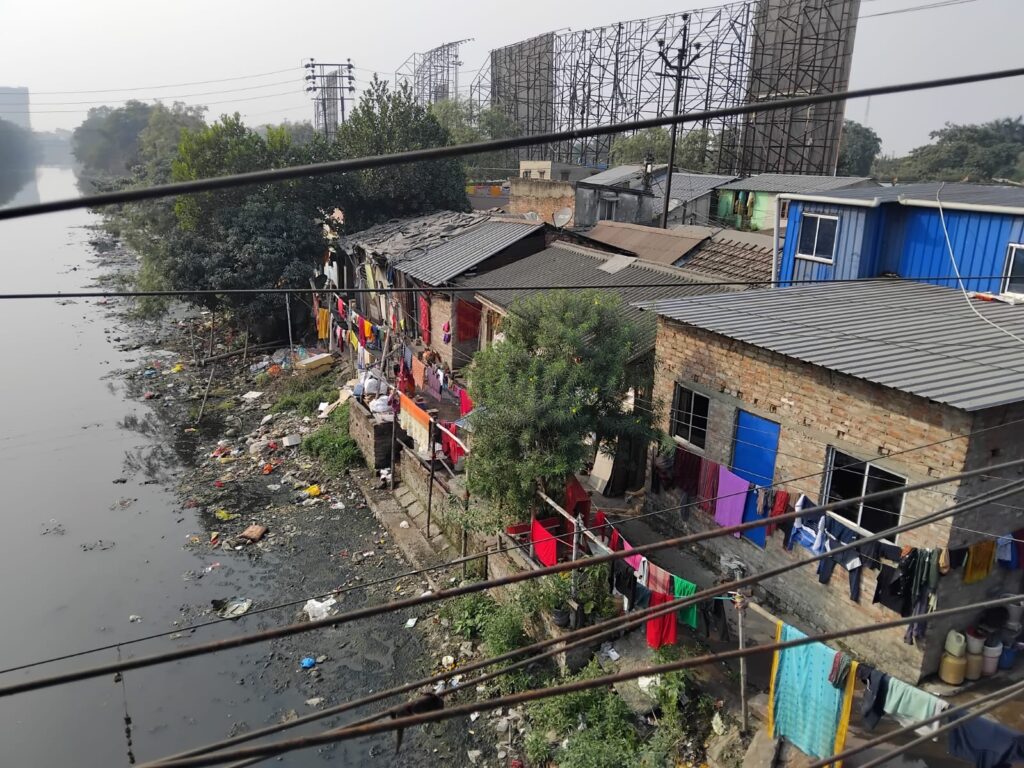
Added to this, some of them also face difficulties in accessing government welfare schemes.
“I have been to the offices and submitted all the necessary documents. They told me to wait. I have been waiting for years now,” said Snehalata, referring to the Lakshmi Bhandar scheme.
The Lakshmi Bhandar scheme, initiated by the West Bengal government in February 2021,[ii] aims to provide financial assistance of around ₹1,500–₹1,700 every month to women above the age of 25 years. Snehalata said she has been unable to access the scheme since 2022, even though she receives a message every month stating that the amount has been credited.
When asked whether they had a union or committee to raise their demands, Snehalata said that they had never been part of one since they started working. They find jobs based on informal discussions and community networks.
“However, the idea of being under a formal union is not at all bad. Because that would protect us from sudden job loss and accusations. Everything would be within a contractual framework and be more systematic”, Rinku told The Rise. “If any one of us faces a problem, there would be a proper system to address it,” she further added.
The voices of these women reveal a lived truth of commitment and responsibility. Being a part of the informal labour force, they remain excluded from many of the protections available to formal workers. The state should focus on creating a formal institutional support for them and ensuring better access to welfare schemes. A recognised union could help secure better wages, worker identities, and ensure a systematic grievance redressal mechanism for these domestic workers.
Until domestic workers are recognised not just as helpers, but as workers with rights, the comfort of countless homes will continue to rest on invisible labour and visible inequality.
(Anushka Mandal is an intern under TRIP.)
(Edited and Mentored by Sneha Yadav)
References
[i] State-wise wage rate for unskilled manual workers under MGNREGA. https://en.vikaspedia.in/viewcontent/agriculture/policies-and-schemes/rural-employment-related-1/mgnrega/state-wise-wage-rate-for-unskilled-manual-workers-under-mgnrega?lgn=en.
[ii] Lakshmir Bhandar Scheme. https://www.myscheme.gov.in/schemes/lbs-wb.
About the author

Anushka Mandal is a Master’s student in History at Jadavpur University, Kolkata. She is currently a TRIP intern.
-
This author does not have any more posts.

Sneha Yadav is an electronics engineer with a postgraduate degree in political science. Her interests span contemporary social, economic, administrative, and political issues in India. She has worked with CSDS-Lokniti and has been previously associated with The Pioneer and ThePrint.
-
Sneha Yadav

-
Sneha Yadav
-
Sneha Yadav
-
Sneha Yadav
-
Sneha Yadav
-
Sneha Yadav
-
Sneha Yadav
-
Sneha Yadav
-
Sneha Yadav
-
Sneha Yadav
-
Sneha Yadav
-
Sneha Yadav
-
Sneha Yadav
-
Sneha Yadav
-
Sneha Yadav
-
Sneha Yadav
-
Sneha Yadav
-
Sneha Yadav
-
Sneha Yadav
-
Sneha Yadav
-
Sneha Yadav
-
Sneha Yadav
-
Sneha Yadav
-
Sneha Yadav
-
Sneha Yadav
-
Sneha Yadav
-
Sneha Yadav
-
Sneha Yadav
-
Sneha Yadav
-
Sneha Yadav
-
Sneha Yadav
-
Sneha Yadav