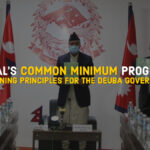
While this national pledge, derived from the electoral documents of six parties, may not cover every aspect, it addresses significant issues that cannot be overlooked. Tackling these concerns is a modest yet crucial step toward realizing our vision and action. The focus should extend beyond the documentation to tangible governance outcomes.
The recent national pledge by the Government of Nepal follows the established tradition of coalition governments issuing a common minimum program, reflecting a collaborative political approach of the government led by the Rastriya Swatantra Party. It outlines eighteen key points forming a comprehensive 100- point governance action plan, incorporating commitments from six recognized political parties elected in the recent parliamentary elections. This national commitment document also includes the electoral declarations and pledges made by these parties during the campaign on Falgun 21, 2081 (Nepali Calendar)
The current government demonstrates a unified political stance that is altruistic, patriotic, and inclusive. In its rhetoric, it acknowledges the pressing realities of public and foreign affairs, striving to establish a transparent and accountable administration focused on the national interest. The government has tasked its administrative services to fulfil their roles and responsibilities in a principled manner, adhering to the established governance norms and conditions.
With a comfortable majority of 182 members in the House of Representatives, the government has laid out these 100 governance matters to demonstrate its commitment to the electorate and shared ownership of the electoral mandate. It is dedicated to implementing policies, programs, budgets, and governance reforms that encompass all ministries and institutional mechanisms. The implementation of this national commitment will be overseen by the Office of the Prime Minister and Council of Ministers to ensure effective execution and coordination.
The pledge emphasizes the importance of economic stability and reform, highlighting the government’s role in regulation and facilitation, as previously promised by the past administrations. Addressing the alarming figure of 500,000 unemployed individuals annually, the government prioritizes creating job opportunities to alleviate public disenchantment. It aims to promote economic prosperity while combating corruption and fostering good governance through collaborative efforts with all stakeholders.
Recognizing the private sector as a vital driver of national prosperity, the government seeks inclusive economic growth and streamlined foreign direct investment. This document aligns with the constitutional provisions outlined in the 2015 Constitution of Nepal and emphasizes the importance of public-private partnerships (PPP) in various economic ventures. It is committed to repealing outdated laws and enacting new legislation to remove barriers to economic progress. A self-reliant Economic Charter has been introduced to build consensus until economic transformation is achieved, with goals of reaching middle-income status, a per capita income of USD 3,000, and a GDP of USD 100 billion.
The government is committed to fostering a digital economy and creating a policy ecosystem that promotes paperless governance and e-business. In the next decade, it aims to establish stable tax rates and conditions while formalizing the informal economy. The goal of reducing multidimensional poverty to 10% within five years raises questions among economists, particularly given the challenges of navigating interdependent economies. The government is focused on creating conducive policies to enhance the tax system and improve its future application.
Addressing the pressing issues within the banking and financial sector, the pledge underscores the need for effective action to maintain integrity and accountability. The government aims to pursue agricultural mercantilism, ensuring respect for self-reliance through policy reforms, tax exemptions, and investment promotions that benefit farmers. Initiatives will also include providing financial products and services tailored to meet the needs of agricultural workers and promoting local seed banks for quality produce.
Additionally, the government plans to enhance connectivity through the development of agrifood processing corridors and irrigation services. It is committed to the timely completion of national irrigation projects and effective land management strategies. The tourism and civil aviation sectors will also see growth, with 2027 designated as National Health Year and initiatives like the Clean Himal and Safe Expedition campaign.
In energy development, the government will prioritize large water reservoir projects and promote energy-driven industries, particularly hydropower. It seeks to position Nepal as a clean energy hub in South Asia and will establish a Mines and Minerals Authority to attract investment while ensuring environmental sustainability.
Infrastructure development will adhere to stipulated standards, ensuring compatibility with national goals. The transportation system will feature a multimodal approach, aiming for international standards in highways and connectivity while prioritizing safety.
The government emphasizes the importance of human resources in achieving prosperity and aims to enhance governance in the education and health sectors. Plans include establishing local public libraries and model schools, while promoting Nepal as a centre for peace, mindfulness, and holistic health. The health system will be designed to be inclusive, particularly for individuals with disabilities, ensuring access to essential services.
A budget allocation of 8% to the health sector over the next five years will support free medical check-ups for vulnerable populations and expand health insurance programs. The government remains committed to ensuring that basic health services are accessible to all, particularly to disadvantaged groups.
Also Read: Nepal, India and China: Can Trilateralism Shape a Pax Asiana?
In light of global warming, it is essential to proactively address issues related to forests, the environment, and climate change. Good governance and anti-corruption are fundamental to effective governance, alongside administrative reforms and improved service delivery. The decision to maintain a federal ministerial size of 17 aligns with recommendations from the Administrative Reform Commission established in the 1990s. Greater emphasis has been placed on fostering inter-ministerial cooperation, coordination, and communication through the Office of the Prime Minister and the Council of Ministers (OPMCM). The OPMCM oversees the performance of significant projects.
It is proposed to merge the National Planning Commission and the Policy Research Institute to create a National Policy Commission. This government aims to introduce 25% new, skilled human resources over the next five years.
In the realm of e-governance and technology, both the public and private sectors should adhere to uniform standards and identities, an area that has not been adequately addressed despite the existence of an e-governance board. Additionally, the government recognizes the importance of Artificial Intelligence in the evolving digital landscape.
Social justice and inclusion remain priorities, given the pressing social issues and challenges. In terms of international diplomacy, the government aspires to establish a dynamic and balanced foreign policy, transitioning from a buffer status to a strategic bridge. A more practical metaphor views Nepal as a geopolitical connector between the Global North, South, East, and West, influenced by both the Indosphere and Sinosphere. The government advocates a “Nepal First, Nepali First” approach while pursuing economic diplomacy and initiatives like Sagarmatha Sambaad, and seeks collaboration with the international community on labour issues.
The government is keen to harness the knowledge, skills, and capital of the Nepali Diaspora. In sports, it seeks to promote good governance and anti-corruption. I envision flagship events like the Asia-Pacific Open or Kathmandu Open as international tennis competitions, along with other endeavours of global significance. We have previously witnessed Elephant Polo in Chitwan; why not explore equestrian events, gymnastics, and indoor games like Bag Chaal or international bike adventure competitions? Some progress has already been made despite challenges related to financial and technical resources.
Finally, in its 17th and 18th points, the government reiterates its commitment to disaster management, cooperatives, and microfinance governance. While this national commitment, derived from the electoral documents of six parties, may not cover every aspect, it addresses significant issues that cannot be overlooked. Tackling these concerns is a modest yet crucial step toward realizing our vision and action. The focus should extend beyond the documentation to tangible governance outcomes, which citizens have long awaited over the past 35 years since the advent of democracy in Nepal.
Disclaimer: The views expressed in this article are those of the author solely. TheRise.co.in neither endorses nor is responsible for them. Reproducing this content without permission is prohibited.
About the author