
Empty seats and falling percentiles are evidence that the Indian medical student is now choosing “competence” over being part of a “degree-seeking crowd.” This is a final warning for the system. If we allow medical colleges to remain merely “degree-distributing factories,” the future crisis will not be a shortage of seats, but a shortage of trust.
In the history of Indian medical education, the year 2025 will be recorded as a “turning point” or a “decisive crossroads.” For decades, we lamented the shortage of medical seats; however, today, nearly 20% of seats in NEET PG and Super-Specialty courses remain vacant, which tells a new and deeply unsettling story. This vacancy is not just a matter of numbers; it is a vacuum of trust that a student places in the education system.
Falling Percentiles: Compromising on Quality
The most concerning aspect of this crisis is the drastic reduction in “cut-off percentiles.” In a desperate bid to fill seats, regulatory bodies have lowered eligibility standards so significantly that candidates with zero or near-zero marks are now entering the race for specialization.
Merit vs. Commercialization
Reducing the percentile signals that the system is prioritising the filling of seats and the protection of institutional revenue over the training of competent and qualified doctors.
When admission criteria become a mere formality of filling seats rather than a test of merit, the intellectual and ethical foundations of a sensitive profession like medicine are shaken. This is also an injustice to meritorious students who seek quality education and rigorous training.
The Nature of the Crisis: Expansion vs. Quality
The last decade has seen a rapid expansion in the number of medical colleges. On paper, this appears to be a great achievement, but the ground reality is starkly different. The foundation of medical education is clinical exposure, which depends upon both the quantity and quality of patient interaction. Today, many colleges have magnificent buildings, but their wards are empty. Students have realized that while a degree can be purchased with money or obtained through diluted low percentiles, professional credibility is earned only by working closely with patients.
Also Read: Macaulay to NEP 2020: How India’s Education System Changed
Attacking the Foundation: Neglect of Non-Clinical Subjects
Postgraduate (PG) seats in foundational subjects, such as Anatomy, Physiology, and Biochemistry, continue to remain vacant. Limited career opportunities and low social prestige in these fields have relegated these disciplines to a lower priority list. Furthermore, the practice of reappointing retired teachers by relaxing eligibility norms has drained the vitality of “teaching and training” in these departments.
Moreover, in private medical colleges, “ghost faculty” (teachers existing only on paper) and “fake patients” brought in during inspections are open secrets. Despite efforts by the National Medical Commission (NMC), this corruption has reduced medical education to a mere “paper-pushing” exercise. When students observe that even their teachers lack permanence and accountability, disillusionment becomes inevitable.
The Solution: A Path to Systemic Revival
To save this hollowing system, reforms akin to a “surgical strike” are required.
Dignity of Percentile and Merit
The trend of lowering the percentile to the bare minimum merely to fill seats must be halted immediately. Eligibility standards must remain high to ensure the quality of specialist doctors is never compromised. If seats remain vacant, it should be a matter of introspection for the system, not an excuse to lower standards.
Quality-Based Accreditation
The National Medical Commission should base accreditation not merely on infrastructure, but on actual bed occupancy, outpatient footfall, and live surgery data. End-to-end digital monitoring and biometric attendance must be implemented without discretionary human intervention.
Re-evaluating Non-Clinical Subjects
To make these subjects attractive, dedicated research grants and higher pay scales must be introduced. Specialists in these disciplines should be prioritised in pharmaceutical research, medical education, and public health policymaking, thereby expanding their professional scope and relevance.
Faculty Development and Respect
To attract young doctors towards academia, a supportive work environment, transparent promotion mechanisms, and academic autonomy must be ensured. Dependence on retired teachers should be reduced in favor of prioritizing young faculty and fresh academic leadership.
Accountability of Private Institutions
The commercialization of education and hidden costs in private colleges must be checked. A transparent and affordable fee structure (aligned with NEP 2020) must be ensured so that meritorious students are not excluded solely due to financial constraints
Conclusion
Empty seats and falling percentiles are evidence that the Indian medical student is now choosing “competence” over being part of a “degree-seeking crowd.” This is a final warning for the system. If we allow medical colleges to remain merely “degree-distributing factories,” the future crisis will not be a shortage of seats, but a shortage of trust. The true solution lies not in increasing the number of seats, but in filling those seats with quality and merit.
Disclaimer: The views expressed in this article are those of the author solely. TheRise.co.in neither endorses nor is responsible for them. Reproducing this content without permission is prohibited.
About the author
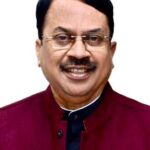
Prof. Ashok Kumar is former Vice-Chancellor of Deen Dayal Upadhyaya University, Gorakhpur (U.P.) & CSJM University, Kanpur, (U.P.), Nirwan University, Jaipur, Rajasthan, and Shri Kallaji Vedic University, Nimbahera, Rajasthan. He is President of the Social Research Foundation, International Society of Life Sciences.




















What an excellent article!
It focuses our attention on a crucial topic which touches humans who deserve high quality medical care in India.
I commend the author for highlighting the shortcomings in our system in an attempt to bring meaningful changes in the field of medical education.
Dr. Shashi Panicker