


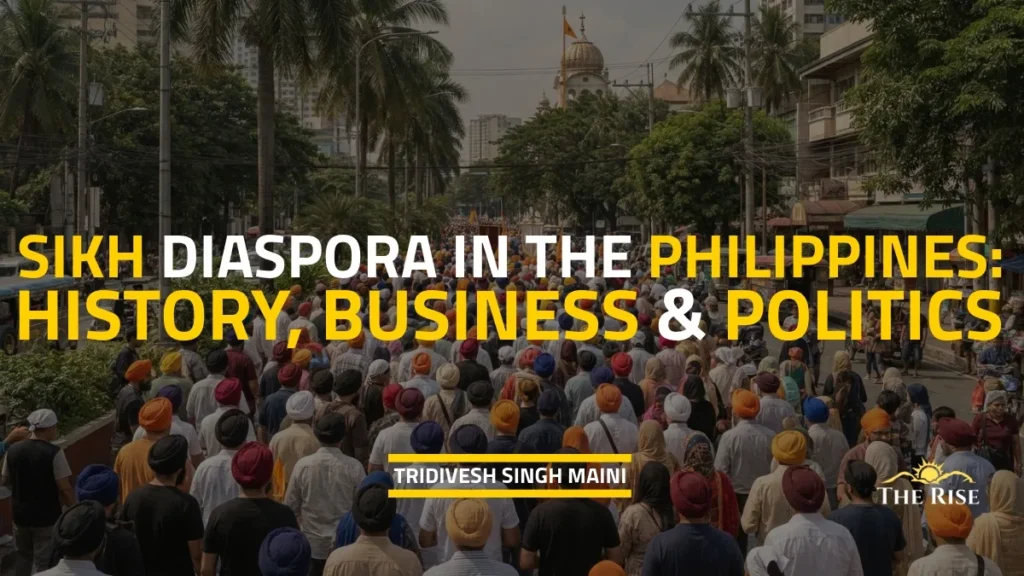
While the Indian diaspora in general and the Punjabi Sikh diaspora in particular in the West often draws attention, the stories of diasporic communities in non-western countries often get relegated to the margins of scholarship and research. The fascinating history of groups like Punjabi-Sikhs in the Philippines needs to get more space in discussions on the diaspora.
The PM Narendra Modi’s visit to Manila, the Philippines to attend the 23rd India-ASEAN Summit and the 21st East Asia Summit is important for more than one reason. There were several important meetings held on the sidelines of the summits, including the Quad leaders meeting.
PM Narendra Modi, during his address at the 23rd ASEAN Summit highlighted how India-ASEAN ties had grown. He said, “Over the past few years, our Act East Policy has given new momentum and greater depth to India-ASEAN relations. Our partnership has now expanded beyond our shared culture and heritage, acquiring new dimensions in areas such as digital technology, defence, and space”. Further, people to people ties and the Indian Diaspora in the ASEAN have played a key role in strengthening ties between India and South-East Asia.
During his visit to the Philippines, Modi visited Gurdwara Khalsa Diwan in Manila, on November 17. He paid obeisance and participated in the foundation stone ceremony for the re-development of the Gurdwara (the redevelopment plan proposes a five-storey complex spanning approximately 10,000 square metres). Gurdwara Khalsa Diwan is the oldest Gurdwara in Philippines, first established in 1901, formally organized in 1903, and then registered as Khalsa Diwan in 1924. Apart from the Khalsa Diwan Gurdwara, there are 12 other Gurdwaras in Philippines. The number of Indians in Philippines is estimated at over 70,000 with members of the Sikh community being amongst one of the largest groups (estimated to number between 30,000 and 50,000). The Indian diaspora in Philippines is concentrated in Manila, Cebu and Davao city.
Also Read: BRICS and the Dollar: The Shift Towards Local Currencies
While commenting on his visit to Gurdwara Khalsa Diwan PM in a post on X said, “Feeling very blessed to be at the Gurudwara Khalsa Diwan in Manila” The ceremony was also attended by Philippine Senator Francis Joseph Escudero and Manila City Mayor Fransisco Isko Moreno. In a post on November 16, Modi also said: “Inspired by the teachings of the Guru Sahibs, the Sikh community has made a mark globally, being at the forefront of serving others and building a better planet.”
Sikh Diaspora in Philippines
While PM Modi’s visit to the historic Gurdwara is significant for several reasons, especially from the lens of diaspora outreach, it also has drawn attention towards the Sikh diaspora living in Philippines. The number of Indian students in Philippines is estimated at over 10,000 with the bulk of them enrolled in medical courses.
Sikhs in the Philippines & the Money-Lending Business
Sikhs and Sindhi traders first moved to Philippines in the late 1890s. Initially, Sikhs who moved to Philippines tried their hands at farming. Later, they shifted to money lending. The key reasons for this shift were: land ownership restrictions for foreigners and a growing demand for informal capital from micro-entrepreneurs.
Since South Asians, particularly Sikhs are involved in money lending in a big way, they are referred to as 5-6 (also Bombay 5-6). The business of money lending is referred to as ‘5-6’ because when someone borrows 5 pesos they are supposed to return 6 pesos. In 2017, during the tenure of President Rodrigo Duterte, money lenders (many from the Punjabi community) were told by the Philippines Securities and Exchange Commission to legalize their businesses. Those who did not comply faced legal action. According to a recent report titled “Consumer Credit in Southeast Asia 2026,” by a Singapore based market research firm namely Momentum Works, the overwhelming percentage of adults (97%) in Philippines do not possess credit cards and hence borrowing from 5-6 lenders (largely Punjabis) is common.
While Sikhs and Punjabis have largely been associated with money lending, they have excelled in other professions including politics. One of the prominent members of the Sikh community was Ramon Bagatsing Sr. who served as a Congressman, representing Manila’s third district, and was the longest serving mayor of Manila (1971-1986). During PM Modi’s visit, Ramon S. Bagatsing Jr, the son of Ramon Bagatsing presented the biography of the former mayor. It is titled, “Bombay: A True-Blue Filipino”. While Ramon S Bagatsing Jr. served as the Philippines Ambassador to India, his brother is a politician and a former Congressman of Manila’s 5th district.
PM Modi in a post on X while commenting on the life of Ramon Bagat Singh Sr said, “Mr. Ramon D. Bagatsing’s life is one of courage, dedication and extensive public service. His father belonged to Punjab. From humble beginnings, he overcame various hardships, including those of the Second World War, to emerge as one of Manila’s most distinguished public figures…”
While the Indian diaspora in general and the Punjabi Sikh diaspora in particular in the West often draws attention, the stories of diasporic communities in non-western countries often get relegated to the margins of scholarship and research. The Sikh diaspora in ASEAN, with the exception of Malaysia, which has received relatively greater attention, is a perfect instance of the same.
Conclusion
The fascinating history of groups like Punjabi-Sikhs in the Philippines needs to get more space in discussions on the diaspora. In a changing economic landscape, where there are growing linkages between India and Philippines, the diaspora can be an important bridge between both countries.
Disclaimer: The views expressed in this article are those of the author solely. TheRise.co.in neither endorses nor is responsible for them. Reproducing this content without permission is prohibited.