


The tea reaches cups far beyond Assam, but the workers who are the backbone of this industry still wait for fair wages and schemes that actually reach them. Garden authorities have confirmed that the plantation workforce now has fewer young people, as low wages has pushed the younger generation to migrate to other states in search of better-paying opportunities.
Assam’s tea industry is as economically vital as it is historically rooted and remains central to India’s status as one of the world’s leading tea producers. Yet behind this global recognition lie generations of workers who show up with a smile, quietly carrying a hardship that often goes unnoticed. TheRise examined Moijonga Tea Garden, Goalpara, and talked to the plantation workers.

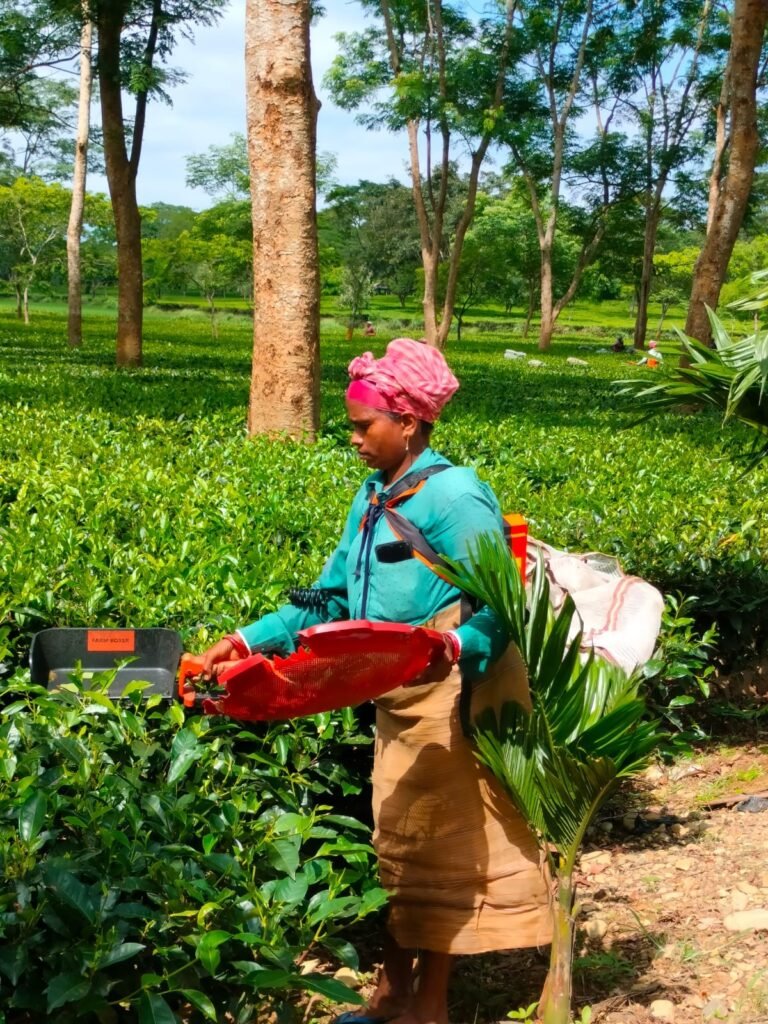
This garden was established in 1920, spanning 393 acres and operating under Supreme Tea Plantation Private limited, employing around 400 workers. It yields 2–3 lakh leaves on a monthly basis which are sold at Guwahati’s auction centre. “Profits have grown unpredictable amid rising competition,” said Kamala Singh, the garden manager.
Climate change has further affected the industry, with extreme heat and rainfall harming leaf production and plant health. Plucking runs March to November; while December to February is dedicated to replanting and land maintenance. “The plants are now given extra care to help tackle these effects of climate change and protect the garden’s overall yield,” said Amitabh Das, an official at Moijonga tea garden.
Alongside these challenges, workers also face a distinction in their employment status. Workers at Moijonga are divided into permanent and temporary categories based on whether they hold a permit, granted by the garden authority based on performance, with locals given hiring priority. Both groups receive equal wages and facilities, though only permanent workers get firewood. “If a permit-holder dies, a family member can inherit that permit. I inherited my mother’s permit,” said Pratiksha Nehar, a worker in the garden elaborating upon the distinction between the two.

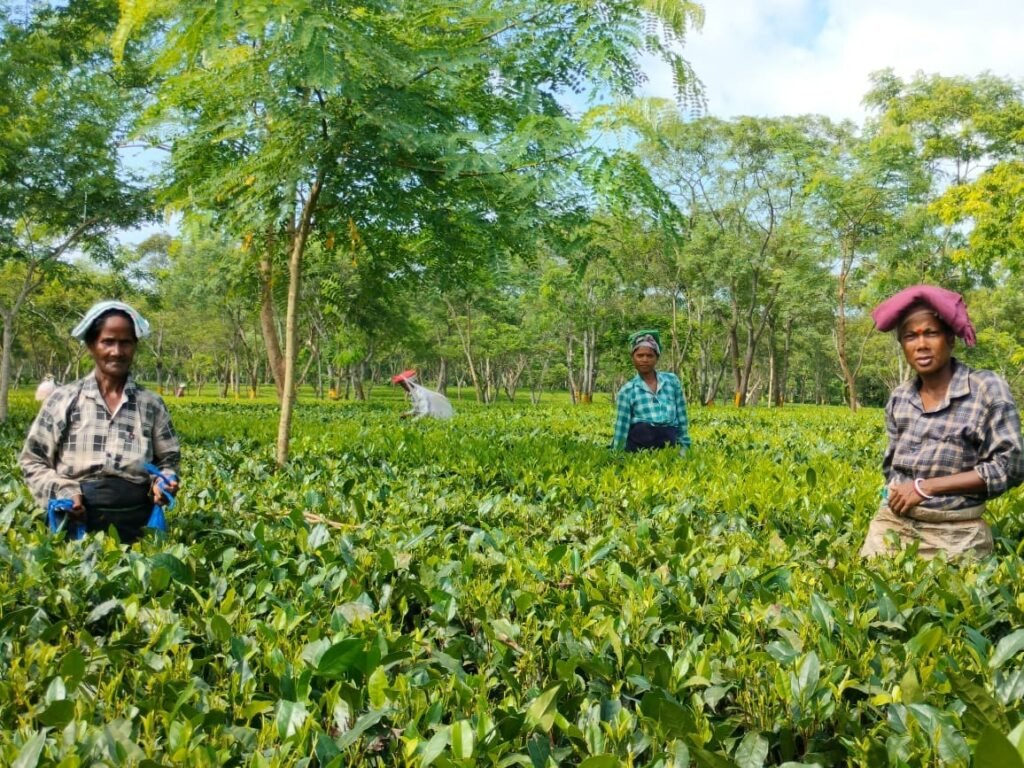
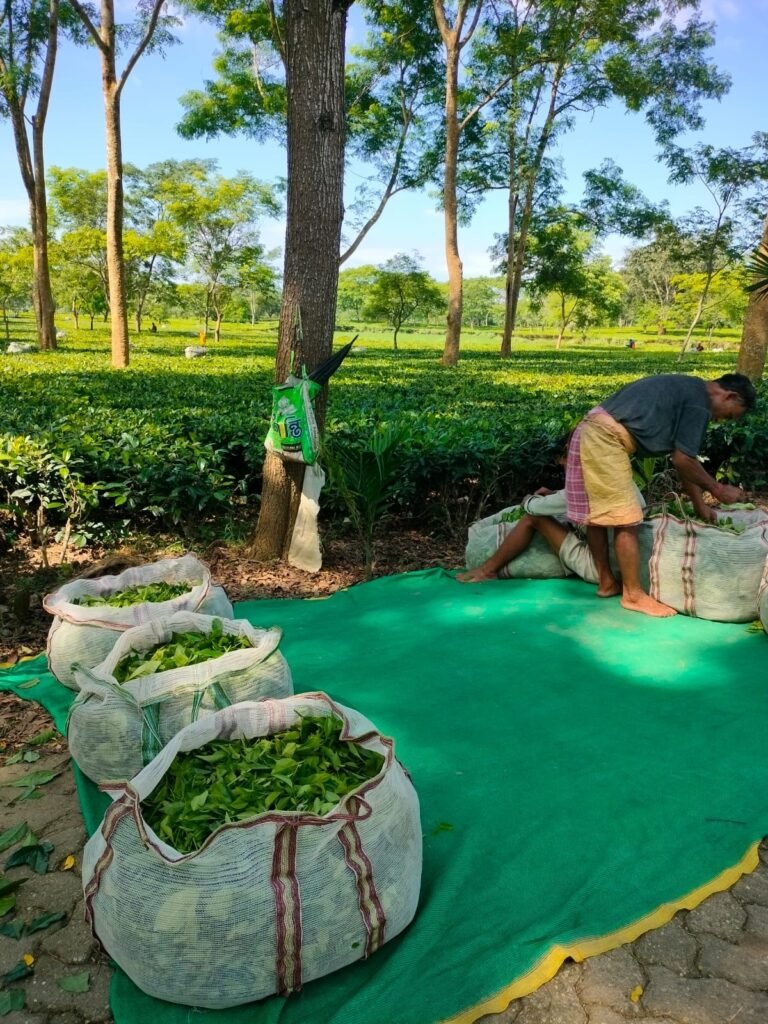
The workday runs from 7 am to 3:30 pm, with a lunch break from 12 to 1 pm. Plucking, the main task, is done mostly by women. Workers pluck only the tender two leaves and a bud, rotating across the garden as each section takes 10–12 days to regrow. “The daily target is 24 kg; extra kilos earn Rs 4 each, while falling short costs Rs 1 in deductions.,” said Pratiksha. Workers said they usually collect 50–60 kg, well above the target. A truck arrives three times daily to weigh and collect leaves, easing the load.
However, despite the immense load of work, the wages remain low. Workers at Moijonga earn Rs 280 a day. “The wages are so low; it is very difficult for us to manage everything with that much money. We do the hard work, and we get so little money in return,” said Gargi Munda, who has been working in the garden for 21 years. Several tea worker groups along with organizations like All Adivasi Students’ Union, have long demanded wages of Rs 351 a day.
Apart from wages, access to healthcare remains another concern. An on-site hospital offers free treatment for minor injuries; critical injuries are treated at the garden’s expense, with sick wages during recovery. However, the absence of an ambulance at the site remains a major problem. “We can only suggest to the government to arrange an ambulance for us, which will help the workers in case of an emergency,” said Kamala Singh, the garden manager.
Infrastructure poses another challenge for these plantation workers, especially during the monsoon. Roads inside the garden turn muddy and waterlogged every monsoon. “We need properly built roads in the garden. Because the condition of the roads worsens during monsoon and creates problems for the workers to commute” said Ajay Mehar, one of the workers. A solar-powered water dispenser from the Public Health Department, Goalpara, supplies drinking water, though it runs low without sunlight. Hand pumps serve as backup.
While plantation workers face several challenges, various government schemes have been launched to provide them with support. On paper, tea workers in Assam are covered by several government schemes, besides basic support under the Plantation Labour Act, 1951. A central initiative has committed over Rs 1,000 crore toward tea workers’ welfare and education across Assam and West Bengal. The state’s “Eti Koli Duti Paat” scheme has given one-time aid to seven lakh workers.
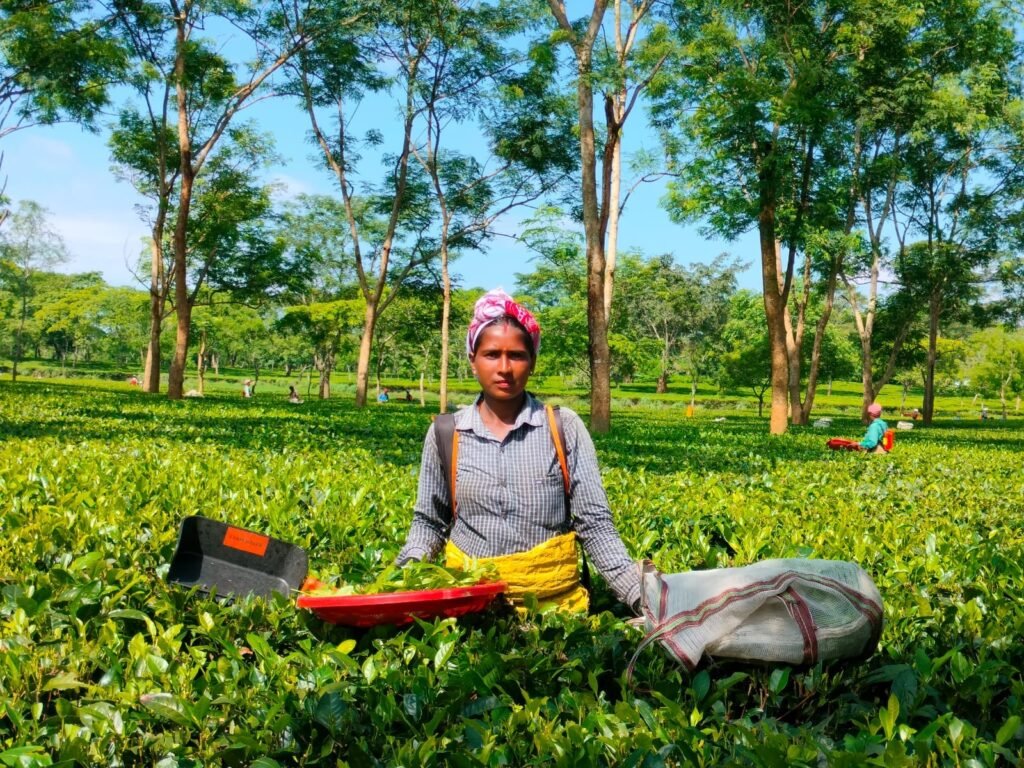
Yet, the gap between schemes on paper and their reach on the ground remains evident. When asked, most workers said they were not even aware these schemes existed, let alone whether they had received any benefit from them. “We are not educated, and we are simple workers; how would we know anything? But I have heard that there are many welfare schemes for tea workers like us, but we never received any facilities from the schemes. So we are not aware of any schemes” said Teresa Mains, one of the workers. A 2024 government audit found wages in the sector insufficient, with Barak Valley workers still paid less than those in the Brahmaputra Valley for the same work. Lack of education and low income further hinder workers’ overall development.
When asked whether they would want their children to take up this work, every worker gave the same answer: a big “NO“. Most said they want their children to get educated and employed elsewhere. Garden authorities confirm the workforce now has fewer young people, as low wages push the younger generation to migrate to other states in search of better-paying opportunities.
The tea reaches cups far beyond Assam, but the workers who are the backbone of this industry still wait for fair wages and schemes that actually reach them. Whether the younger generation will carry the industry forward remains uncertain. Unless the needs of workers are genuinely considered and concrete efforts are made to improve their quality of life.
References
- Plantation of Labour Act,1951- Plantations Labour Act.PDF
- About Tea Industry of Assam- About tea industries | Industries & Commerce | Government Of Assam, India
- Inland Emigration Act,1859- Inland Emigration Act, 1859 – Wikipedia
- Report No. 5 of 2024-Performance Audit Report on Implementation of Schemes for Welfare of Tea Tribes, Government of Assam- Audit Reports | Accountant General (Audit) Assam, Guwahati
- Wage hike and distribution of land ownership- Tea workers’ wage hike notified in poll-bound Assam – The Hindu
- Welfare Scheme for Tea Workers in Assam and West Bengal- Rs.1000 Crore to be provided for Welfare Scheme for tea workers of Assam and West Bengal especially Women and Children
- Payment of Bonus Act,1966- PAYMENT OF BONUS ACT | Chief Labour Commissioner
- Assam Tea Garden Workers’ Financial Assistance Scheme, 2026- Assam Mukhya Mantrir Eti Koli Duti Paat Scheme 2026: Eligibility, Benefits and Application Process – Govt Schemes Info
- Tea workers Insurance Benefits- Insurance Premium @ Rs.12.00 to 10.00 Lakh Beneficiaries | Directorate of Tea Tribes and Adivasi Welfare | Government Of Assam, India