


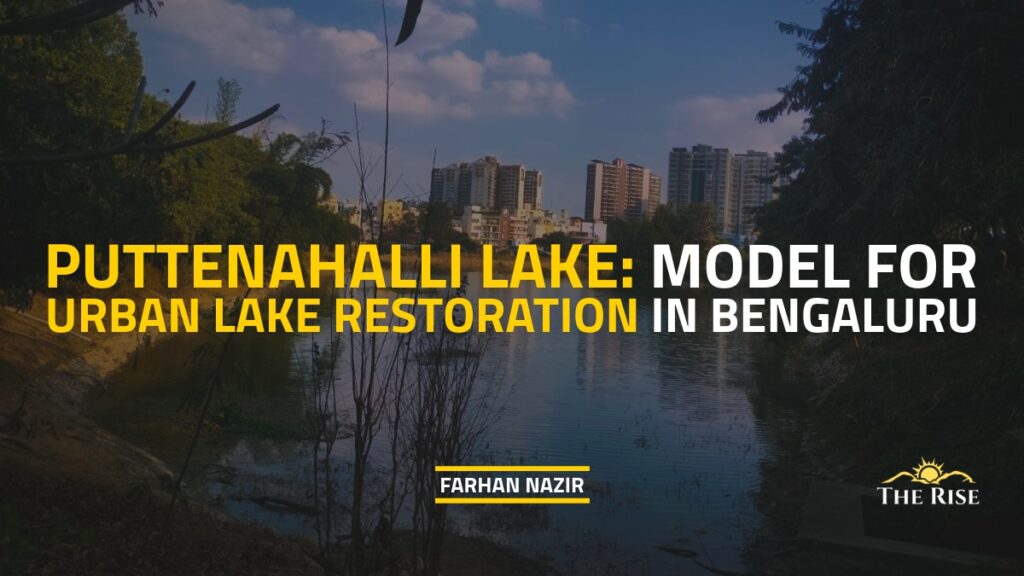
Puttenahalli Lake holds wider significance for urban India. It illustrates how lakes can serve as climate-resilient infrastructure, biodiversity refuges, and public commons simultaneously. Crucially, it demonstrates that restoration does not require exclusivity or commercialisation; instead, it thrives on balance, restraint, and respect for natural systems.
Puttenahalli Lake, located in the heart of JP Nagar, South Bengaluru, stands today as one of the most refined examples of how an urban waterbody can be conserved, restored, and sustained without compromising its ecological integrity. Spread across nearly 13 acres, the lake has evolved into a fully functional freshwater ecosystem that harmoniously integrates hydrology, biodiversity, and public use. Its significance lies not in spectacle or scale, but in balance—between nature and city life, conservation and access, science and stewardship.

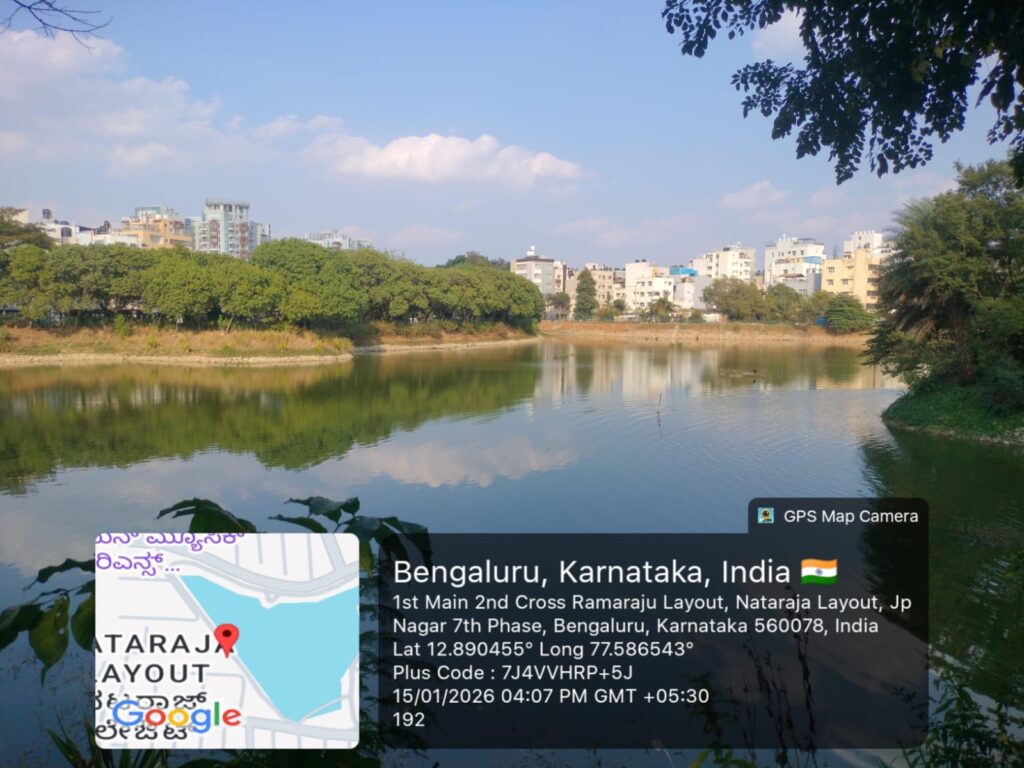
In a rapidly urbanising metropolis like Bengaluru, where land-use pressure is intense and open natural spaces are limited, Puttenahalli Lake demonstrates that urban development and environmental responsibility can coexist. The lake occupies a strategic position within a dense residential landscape, yet continues to perform vital ecological functions that benefit both people and nature.
At its core, Puttenahalli Lake functions as a rain-fed freshwater reservoir, capturing monsoon rainfall and surface runoff through its feeder channels. This stored water plays a quiet but crucial role in moderating stormwater flow, reducing the risk of localised flooding, and replenishing groundwater reserves. In a city that depends heavily on groundwater and external water sources, such decentralised water storage systems are indispensable. The lake also contributes to microclimatic regulation, helping lower ambient temperatures and improve air quality in its immediate surroundings.
What distinguishes Puttenahalli Lake is the manner in which restoration and management have been approached. Rather than focusing on ornamental landscaping or intensive infrastructure, the emphasis has remained firmly on restoring natural processes. Desilting improved the lake’s water-holding capacity, embankments were stabilised to prevent erosion, and protective buffers were developed to reduce external pressures. These measures ensured that the lake could once again function as a living system rather than a static water feature.
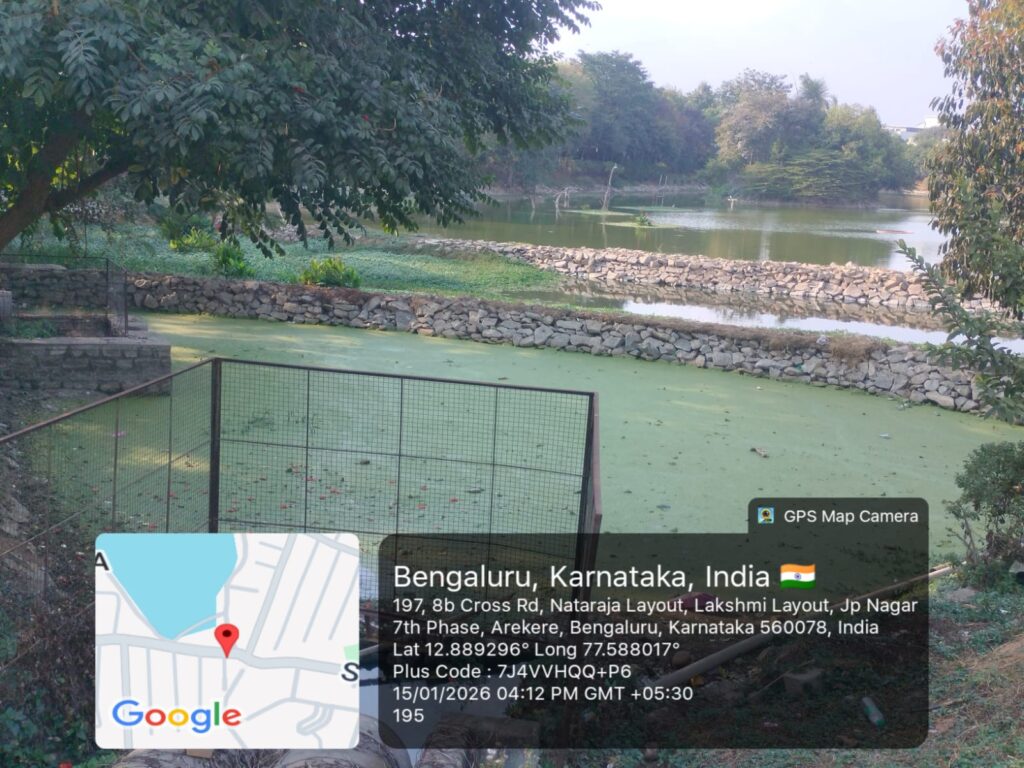
Vegetation around the lake has been planned to enhance ecological resilience. A diverse assemblage of trees—including cadamba, portia tree, mahogany, Singapore cherry, Gmelina arborea, badminton-ball tree, and Pterygota alata—forms a continuous green buffer. This vegetation performs multiple roles: it stabilises soil, filters runoff, provides shade, and creates layered habitats essential for wildlife. The presence of native and well-adapted species has strengthened the ecological fabric of the lake, allowing it to support a wide range of organisms despite its urban setting.
One of the most compelling indicators of the lake’s health is its avifaunal diversity. Puttenahalli Lake supports more than 80 species of resident and migratory birds, making it a significant urban biodiversity node. Species such as Indian spot-billed ducks, purple herons, Eurasian coots, Indian pond herons, garganeys, and common kingfishers are regularly observed. The sustained presence of migratory birds is particularly noteworthy, as it reflects suitable habitat conditions and reliable food availability. In ecological terms, this diversity signals a system that is not merely surviving, but functioning effectively.

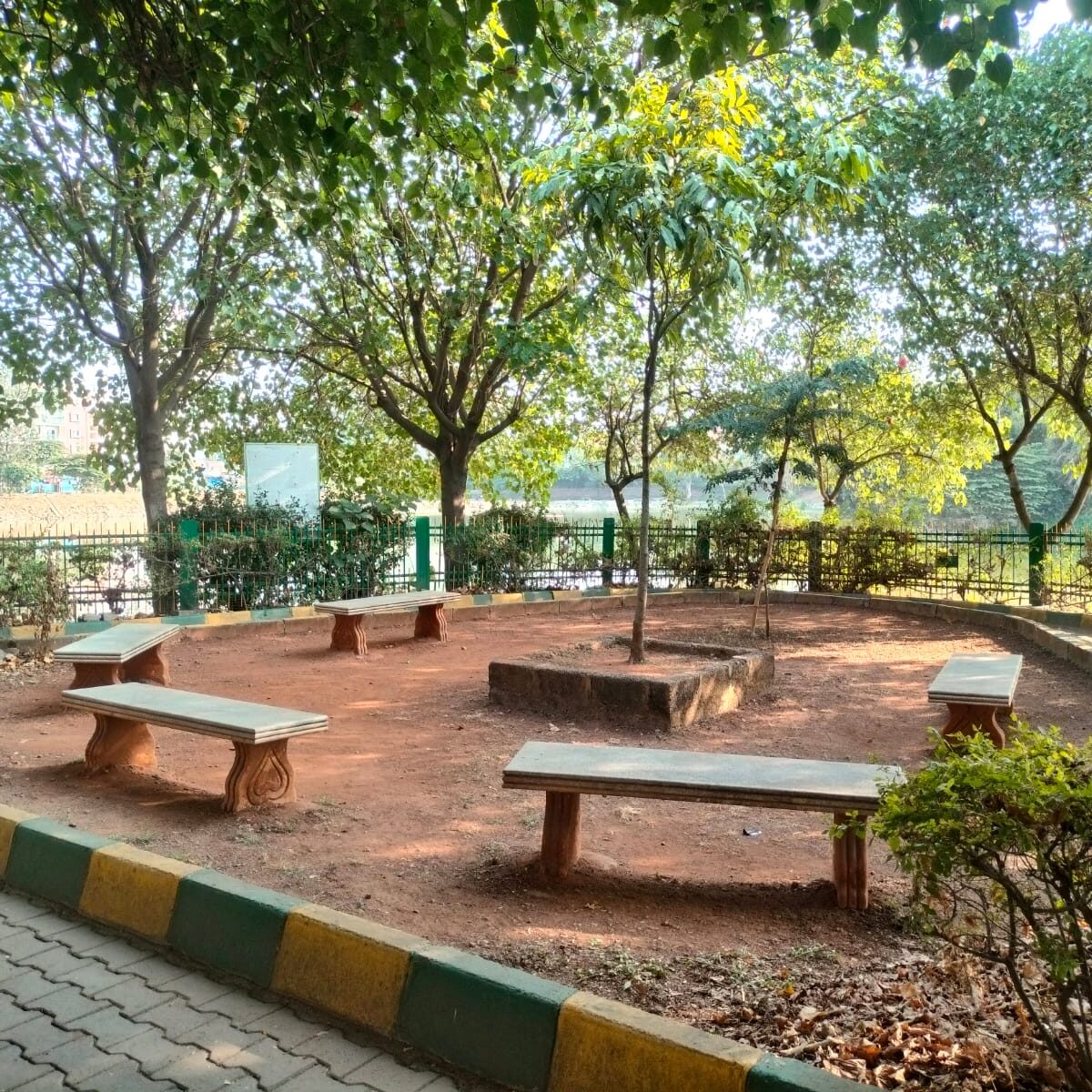
Equally important is the way in which public access has been integrated into the lake’s design. A continuous walking and jogging path traces the lake’s perimeter, offering residents a safe and serene space for daily physical activity and mental well-being. Seating areas and viewing points encourage quiet engagement with nature, while the absence of intrusive recreational infrastructure preserves the lake’s tranquil character. By prioritising low-impact use, the lake accommodates people without disturbing wildlife, setting an example for inclusive yet responsible urban design.
The ongoing stewardship of Puttenahalli Lake is anchored in structured management and community involvement. Maintenance, monitoring, and planning are carried out with a long-term perspective, ensuring that ecological gains are preserved rather than eroded over time. Water quality, vegetation health, and biodiversity are treated as continuous responsibilities, not one-time achievements. This approach has enabled the lake to remain resilient in the face of seasonal variation and urban pressure.
Beyond its immediate ecological value, Puttenahalli Lake holds wider significance for urban India. It illustrates how lakes can serve as climate-resilient infrastructure, biodiversity refuges, and public commons simultaneously. Its model underscores the importance of informed stewardship, ecological sensitivity, and sustained care in managing urban natural assets. Crucially, it demonstrates that restoration does not require exclusivity or commercialisation; instead, it thrives on balance, restraint, and respect for natural systems.
Today, Puttenahalli Lake stands as a benchmark for urban lake management—functional, accessible, biodiverse, and resilient. It is a reminder that cities do not have to choose between growth and nature. When waterbodies are understood as living systems and managed accordingly, they enrich urban life in ways that concrete never can.
Puttenahalli Lake is not simply a restored lake. It is a working model of sustainable urban waterbody management, demonstrating how ecological integrity, community access, and long-term stewardship can coexist in the heart of a growing city.
(Farhan Nazir is an intern under TRIP.)