


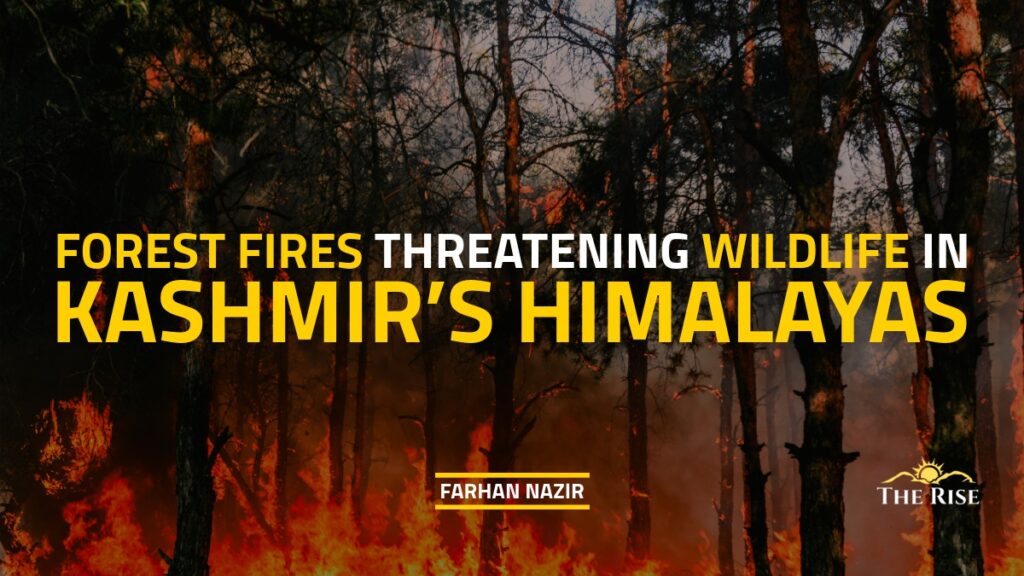
Unlike fire-adapted ecosystems, most Himalayan forests are ecologically sensitive to repeated burning. Pine forests, in particular, accumulate thick layers of dry needles that act as surface fuel, allowing fires to spread rapidly during dry and windy conditions. Climate variability has further increased the flammability of forests.
Forest fires have emerged as one of the most pressing environmental challenges of the 21st century. Although fire is a natural ecological process in certain ecosystems, its increasing frequency, intensity, and unpredictability have transformed it into a major driver of biodiversity loss. Across the Himalayan region, and particularly in Kashmir, forest fires are becoming more frequent due to changing climatic patterns, prolonged dry spells, declining snowfall, and increased human pressure on forest landscapes.
The Himalayan forests are ecologically fragile and biologically rich. Even low-intensity fires can cause long-lasting damage to these ecosystems. Beyond the immediate destruction of vegetation, forest fires exert profound impacts on wildlife by destroying habitats, disrupting food chains, and intensifying human–wildlife conflict. Understanding these impacts is crucial for developing effective conservation and fire-management strategies.
Forest Fires in Kashmir and the Himalayan Context
The Himalayan region supports a wide range of forest types, from subtropical pine forests at lower elevations to temperate coniferous and alpine ecosystems at higher altitudes. In Kashmir, forests dominated by Pinus wallichiana, Cedrus deodara, Abies pindrow, and Betula utilis provide critical habitats for diverse wildlife species.
Unlike fire-adapted ecosystems, most Himalayan forests are ecologically sensitive to repeated burning. Pine forests, in particular, accumulate thick layers of dry needles that act as surface fuel, allowing fires to spread rapidly during dry and windy conditions. Climate variability, including declining winter precipitation and earlier snowmelt, has further increased forest flammability. Human activities such as grazing, forest-edge use, and accidental or deliberate ignitions also contribute to fire incidence.
These changing fire regimes pose a serious threat to wildlife, as many Himalayan species lack the evolutionary adaptation required to cope with frequent and intense fires.
Immediate Effects of Forest Fires on Wildlife
Wildlife Mortality and Injury
Forest fires cause direct mortality and severe injury among wildlife, especially species with limited mobility. Reptiles, amphibians, insects, and ground-nesting birds are among the most affected groups. In Kashmir’s forests, pheasants, small mammals, and amphibians often suffer significant population losses during fire events.
Larger mammals such as the Himalayan black bear (Ursus thibetanus), leopard (Panthera pardus), and musk deer (Moschus chrysogaster) may escape the flames but often sustain burn injuries or respiratory distress due to smoke inhalation. Juveniles and physically weaker individuals face disproportionately higher mortality risks, leading to long-term population declines.
Habitat Loss and Displacement
Forest fires destroy nesting sites, dens, undergrowth, and tree hollows that are essential for wildlife survival. The loss of habitat forces animals to move into unfamiliar areas, increasing exposure to predators, competition, and human-dominated settlements. In alpine and subalpine zones, habitat recovery is extremely slow due to harsh climatic conditions, making fire damage particularly severe.
Long-Term Ecological Consequences
Habitat Degradation and Fragmentation
Repeated forest fires degrade habitat quality and alter vegetation composition. Fire-affected Himalayan forests often show reduced plant diversity and increased dominance of fire-tolerant species. Such changes negatively affect habitat-specialist herbivores and cascade through the food web.
In Kashmir, fragmented habitats reduce movement corridors for species like the Hangul (Cervus hanglu hanglu), restricting seasonal migration and gene flow, and thereby increasing extinction risk.
Disruption of Food Webs
Forest fires reduce the availability of food resources by eliminating understory plants, seeds, fruits, and insects. Herbivore populations decline due to prolonged food scarcity, which in turn affects carnivores. In low-productivity Himalayan ecosystems, these disruptions can persist for decades, slowing ecological recovery.
Impact on Aquatic and Semi-Aquatic Species
Post-fire soil erosion on steep Himalayan slopes leads to heavy sediment runoff in streams, wetlands, and lakes. This degrades aquatic habitats and affects amphibians, fish, and invertebrates. Changes in water temperature and quality further compound stress on these sensitive species, particularly in high-altitude wetlands of Kashmir.
Forest Fires and Human–Wildlife Conflict
As forest habitats deteriorate due to fire, wildlife increasingly moves toward agricultural fields and human settlements in search of food and shelter. In Kashmir, fire-induced habitat loss has been closely associated with increased crop raiding by bears and ungulates, as well as frequent leopard encounters near villages.
These interactions often result in retaliatory actions against wildlife, including poisoning, trapping, or persecution, compounding conservation challenges. Forest fires thus indirectly intensify human–wildlife conflict by shrinking natural habitats and disrupting long-established ecological balance.
Role of the Forest Force in Controlling Forest Fires
The forest force plays an essential role in preventing, controlling, and mitigating forest fires in Kashmir and the Himalayan region. As frontline custodians of forest ecosystems, forest personnel are often the first to detect fire outbreaks through systematic patrolling and local intelligence networks during fire-prone seasons. Early detection and rapid reporting are crucial for effective fire suppression.
Preventive measures undertaken by the forest force include maintaining fire lines, removing dry leaf litter in vulnerable areas, and regulating human activities near forest boundaries. These actions significantly reduce fuel load and fire intensity, especially in pine-dominated forests.
During active fire incidents, forest staff act as first responders, using manual fire-fighting techniques such as soil beating, water spraying, and creation of temporary fire breaks. In mountainous terrain, where mechanized equipment is often impractical, the physical effort, coordination, and local knowledge of forest personnel are indispensable.
The forest force also plays a crucial role in protecting wildlife during fire events by assisting in rescue operations, monitoring animal movement, and safeguarding critical habitats. Post-fire, forest officials support habitat recovery through assisted natural regeneration, plantation of native species, and protection of regenerating areas from disturbance.
Equally important is the role of the forest force in community engagement. By raising awareness among local communities about fire risks and ecological consequences, forest personnel promote cooperation in fire prevention and early reporting, strengthening overall forest resilience.
Conclusion
Forest fires represent a growing ecological threat to wildlife and forest ecosystems in Kashmir and the Himalayan region. The fragile nature of these mountain forests, combined with climate change and increasing human pressure, has intensified the impacts of fire on biodiversity. Wildlife mortality, habitat loss, food-web disruption, and rising human–wildlife conflict highlight the urgent need for effective fire management.
The dedicated efforts of the forest force remain central to fire prevention, control, and ecosystem recovery. Strengthening fire-management strategies, supporting frontline forest personnel, and promoting community participation are essential for safeguarding Himalayan forests and the wildlife they sustain.
References
- Champion, H. G., & Seth, S. K. (1968). A revised survey of the forest types of India. Government of India Press.
- Dar, G. H., Bhagat, R. C., & Khan, M. A. (2012). Biodiversity of the Kashmir Himalaya. Springer.
- Driscoll, D. A., Armenteras, D., Bennett, A. F., Brotons, L., Clarke, M. F., Doherty, T. S., et al. (2021). How fire interacts with habitat loss and fragmentation. Biological Conservation, 257, 109126. https://doi.org/10.1016/j.biocon.2021.109126
- Negi, G. C. S., Samal, P. K., Kuniyal, J. C., Kothyari, B. P., Sharma, R. K., & Dhyani, P. P. (2012). Impact of climate change on the western Himalayan mountain ecosystems. Tropical Ecology, 53(3), 345–356.
(Farhan Nazir is an intern under TRIP.)